|
|
|

 |
 |
    |
Awarded CIA Intelligence Star for Valor
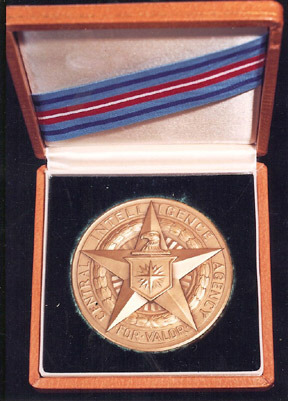
Click on image to enlarge
BX6709 131 19 July 1967 Mission was flown at Mach 3.17 and 82,000 feet for a duration of 4:58 hours. Imagery quality was excellent.
During a flight on 30 October 1967, pilot Dennis Sullivan detected radar tracking on his first pass over North Vietnam. Two sites prepared to launch missiles but neither did. During the second pass at least six missiles were fired at the OXCART, each confirmed by missile vapor trails on mission photography. Sullivan saw these vapor trails and witnessed three missile detonations. Post-flight inspection of the aircraft revealed that a piece of metal had penetrated the lower right wing fillet area and lodged against the support structure of the wing tank. The fragment was not a warhead pellet but may have been a part of the debris from one of the missile detonations observed by the pilot.
Click to enlarge image
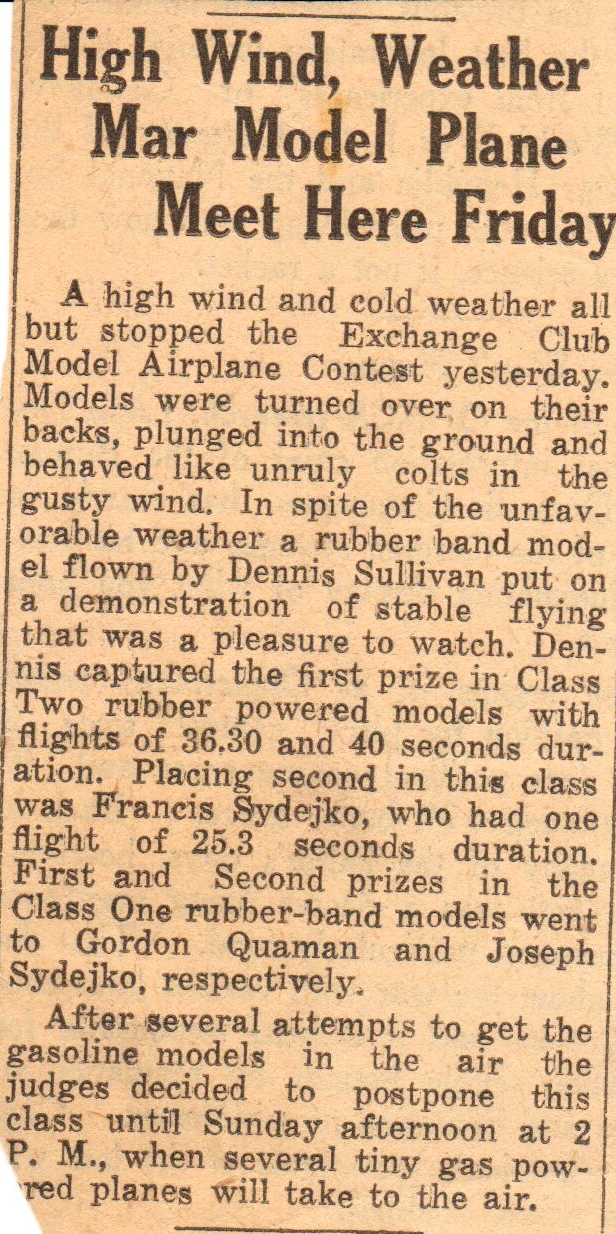 From rubber bands to Mach 3+ |
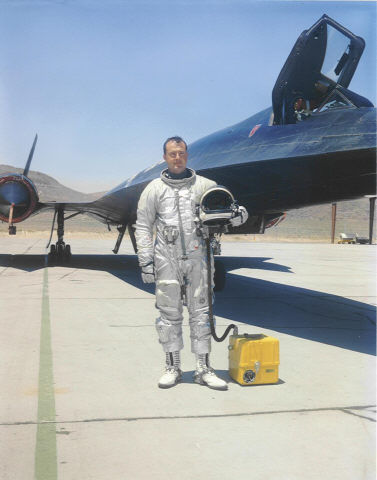 Retired March 1, 1983. |
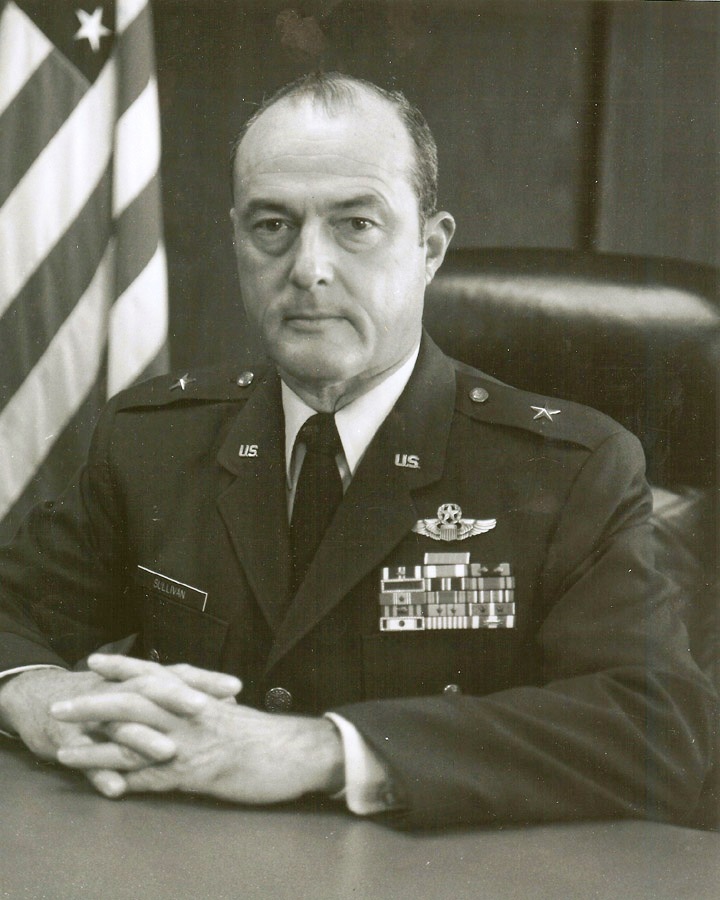
Brigadier General Dennis B. Sullivan was a command director in the Cheyenne Mountain Complex for the North American Aerospace Defense Command, headquartered at Peterson Air Force Base, Colo.
General Sullivan was born in 1927, in Chippewa Falls, Wis., where he graduated from McDonell High School in 1944. In 1946 he entered the U.S. Naval Academy at Annapolis, Md., graduating in 1950 with a Bachelor of Science degree and a commission as a second lieutenant in the U.S. Air Force. He received a master's degree in international affairs from The George Washington University, Washington, D.C., and is a graduate of the Advanced Management Program for Executives, Carnegie-Mellon University in Pittsburgh; the Air Command and Staff College at Maxwell Air Force Base, Ala., and the National War College, Fort Lesley J. McNair, Washington, D.C.
His initial pilot training began in June 1950 in T-6s at Randolph Air Force Base, Texas, and continued in F-80s at Williams Air Force Base, Ariz., and Nellis Air Force Base, Nev.
In January 1952 General Sullivan was assigned to the 80th Fighter-Bomber Squadron, 8th Fighter-Bomber Wing in South Korea, where he flew 100 combat missions in F-80s. After completing his tour of duty in South Korea, he transferred to Truax Field, Wis., and flew F-86 Sabrejets and F-102 Delta Daggers with the 126th, 432nd and 323rd Fighter-Interceptor squadrons. In October 1957 he moved with the 323rd Fighter-Interceptor Squadron to Harmon Air Force Base, Newfoundland, where he continued flying F-102s until September 1960. Following graduation from the Air Command and Staff College in July 1961, General Sullivan served with the 318th Fighter-Interceptor Squadron at McChord Air Force Base, Wash., flying F-106s.
From June 1963 to August 1968, General Sullivan was a special projects officer at Headquarters U.S. Air Force, Washington, D.C. He was then assigned to Headquarters Aerospace Defense Command, Ent Air Force Base, Colo., as chief, Test Branch, Weapons Division. He attended the National War College and concurrently earned his master's degree in international affairs from The George Washington University from August 1969 to August 1970.
General Sullivan served from August 1970 to August 1972 as director of operations and later vice commander of the 9th Strategic Reconnaissance Wing at Beale Air Force Base, Calif., the only Air Force unit flying the SR-71 "Blackbird" strategic reconnaissance aircraft. He then moved to Air Training Command as vice commander of Chanute Technical Training Center, Chanute Air Force Base, Ill., where he served for three years.
In July 1975 General Sullivan took command of the only navigator training wing in the Air Force, the 323rd Flying Training Wing at Mather Air Force Base, Calif. From September 1976 to July 1978, he was assigned as deputy chief of staff for operations at Air Training Command headquarters, Randolph Air Force Base. In this position he was responsible for monitoring and providing staff support to pilot, navigator and survival training programs at 11 bases and several detachments. He then took command of 12th Air Division at Dyess Air Force Base, Texas, and assumed his present duties in September 1981.
General Sullivan is a member of the Society of Experimental Test Pilots and a command pilot with 7,000 hours flying experience. His military decorations and awards include the Legion of Merit with one oak leaf cluster, Distinguished Flying Cross with oak leaf cluster, Meritorious Service Medal and Air Medal with two oak leaf clusters.
He was promoted to brigadier general Feb. 1, 1977, with date of rank Jan. 24, 1977.
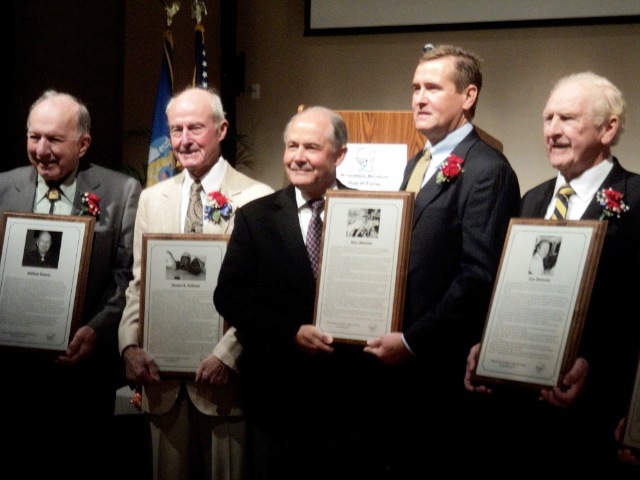
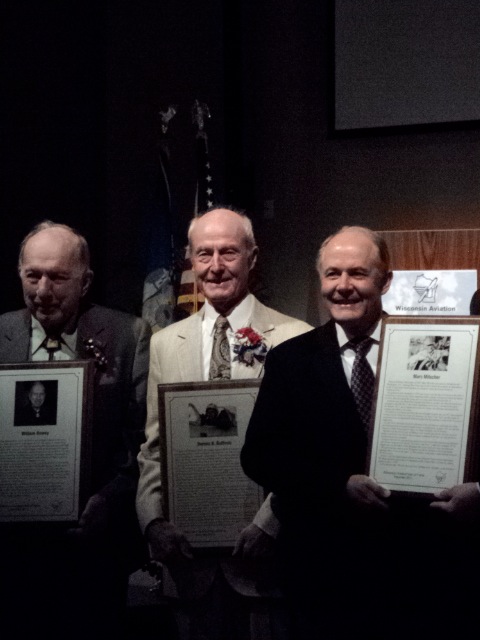
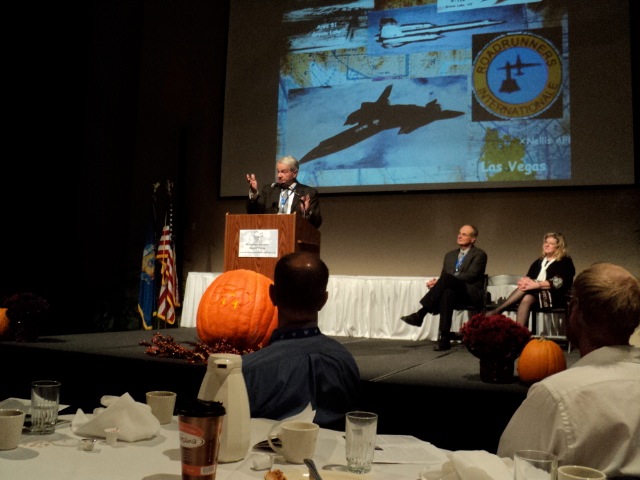
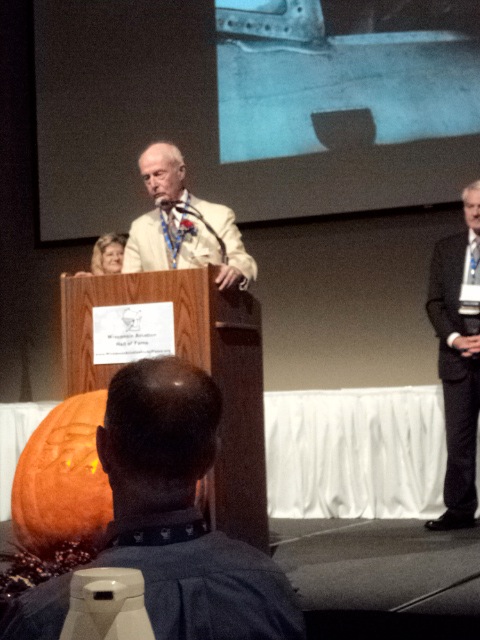
2011 induction ceremony - Wisconsin Aviation Hall of Fame - EAA AirVenture Museum in Oshkosh, Wisconsin
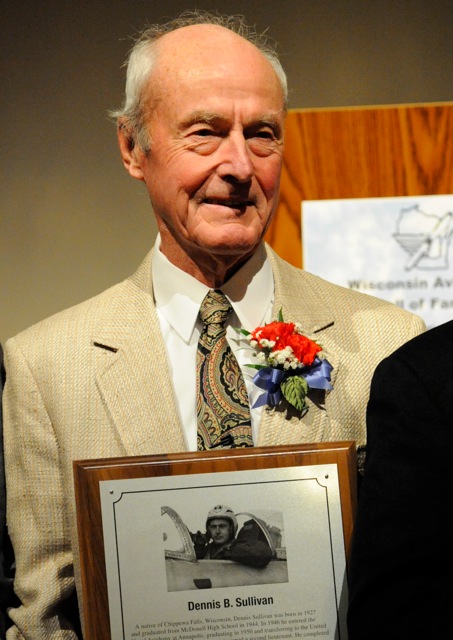
Click on images to enlarge
 |
 |
 |
 |
 |
Video taken of General Sullivan during the 20th reunion of Roadrunners Internationale in October 2007.
He gives an account of an A-12 pilot lowering the A-12 landing gear at Mach 3.2
Click on images to enlarge - Stall mouse over image for caption
 Warming up for my military career |
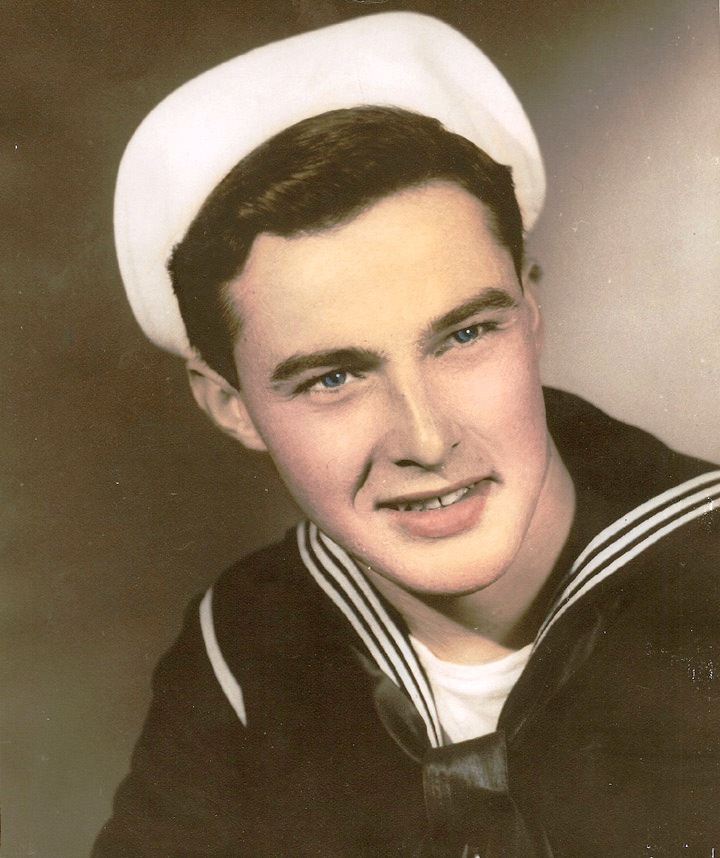 Start of military career - Seaman 1st Class - 1945 |
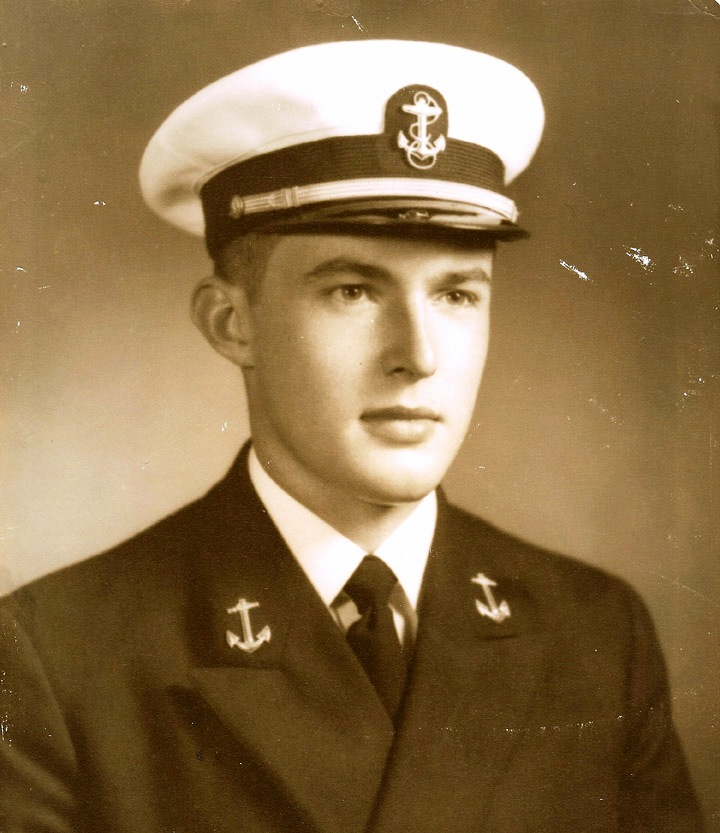 Naval Academy |
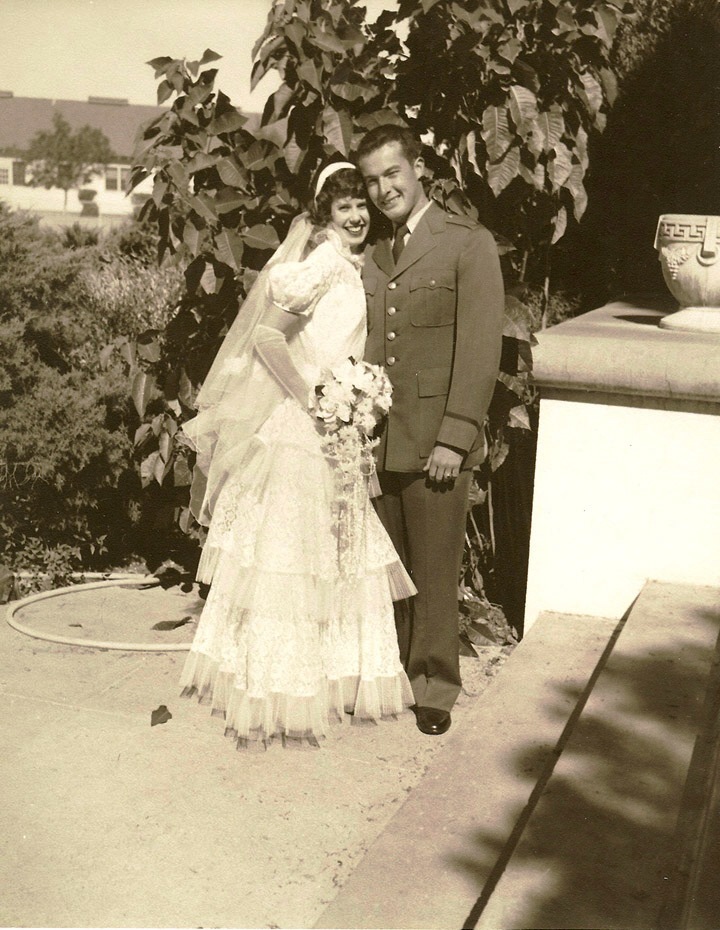 Marriage at Randolph AFB, 1950 |
 Korea 1951 - 1952 |
 Sitting in cockpit of #778 in Korea - 1952 |
 Korea - I am #4 in #778 |
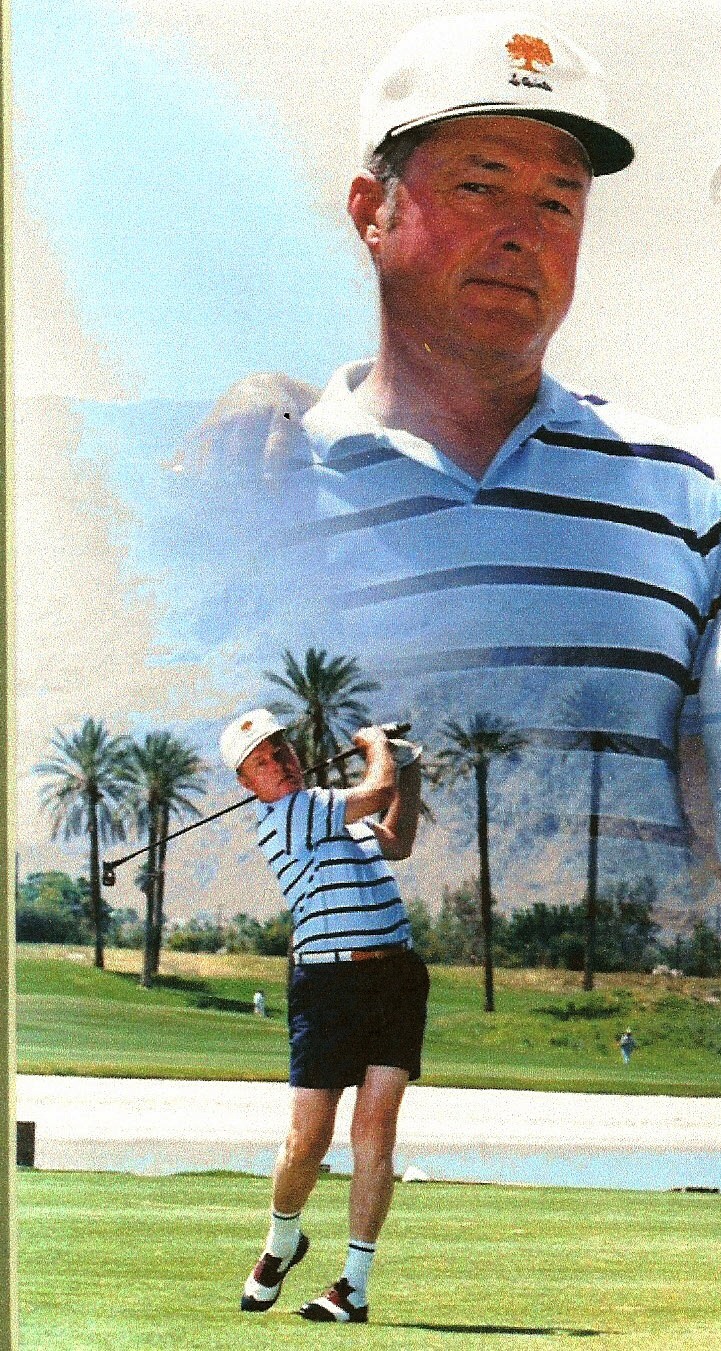 A Senior Golf Tournament at La Quinta, CA |
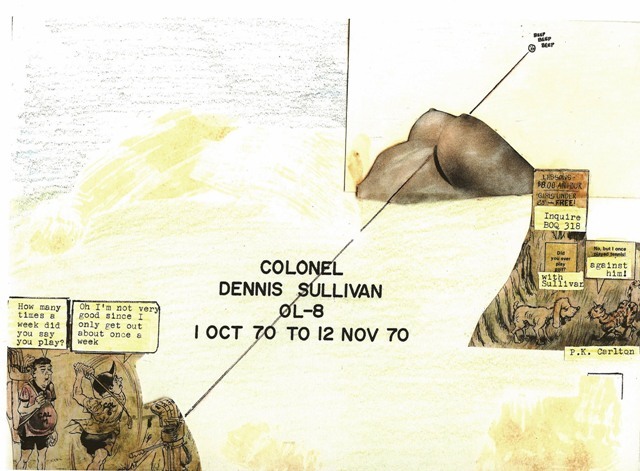 Dennis showing his stuff |
 Oh! Oh! Dennis is coming |
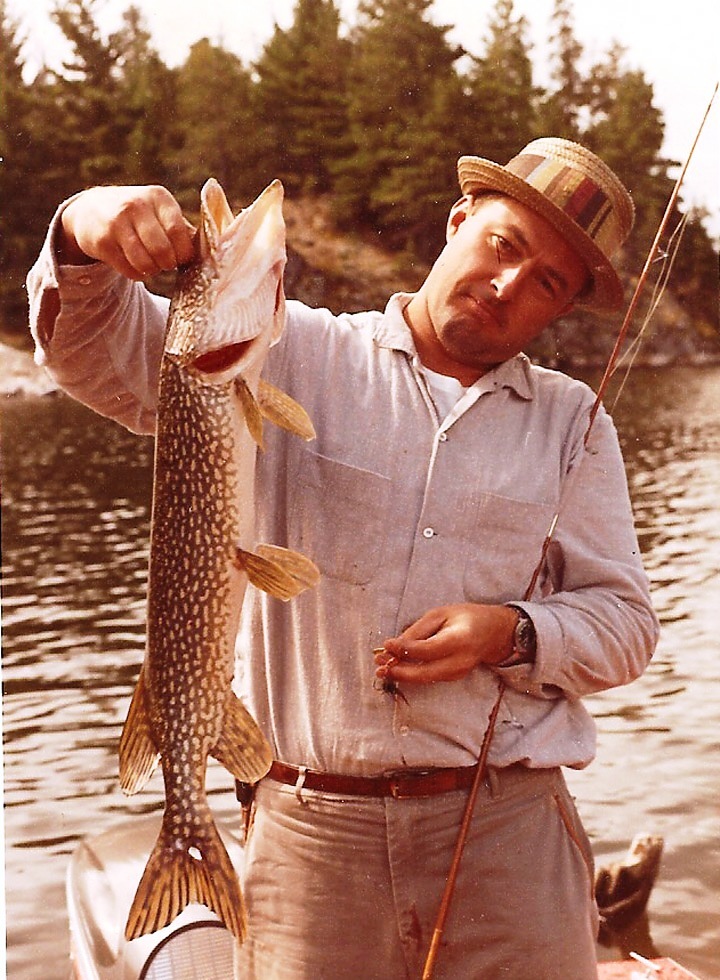 Ontario, Canada - 1964 |
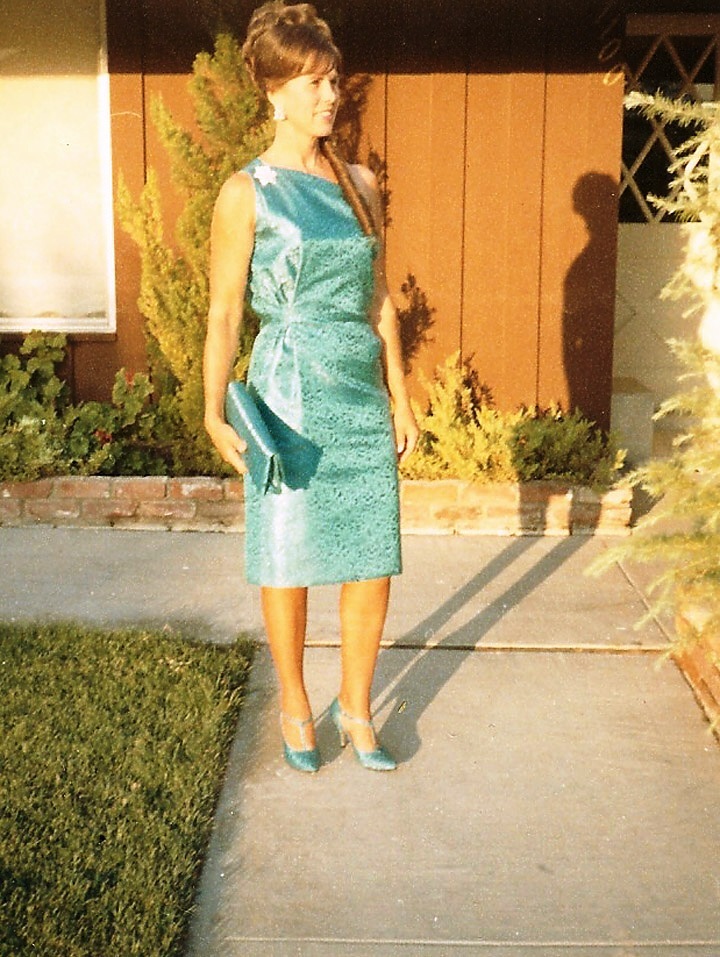 Rose Marie |
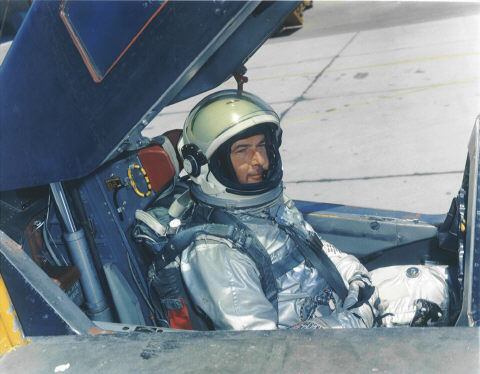 Dennis in his A-12 |
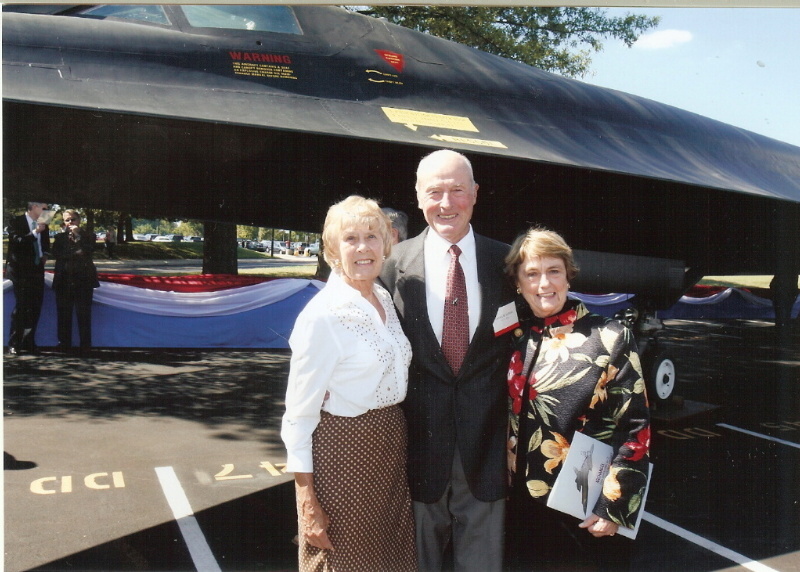
 Dennis standing beside A-12 |
 Hard to spear with a F-101 |
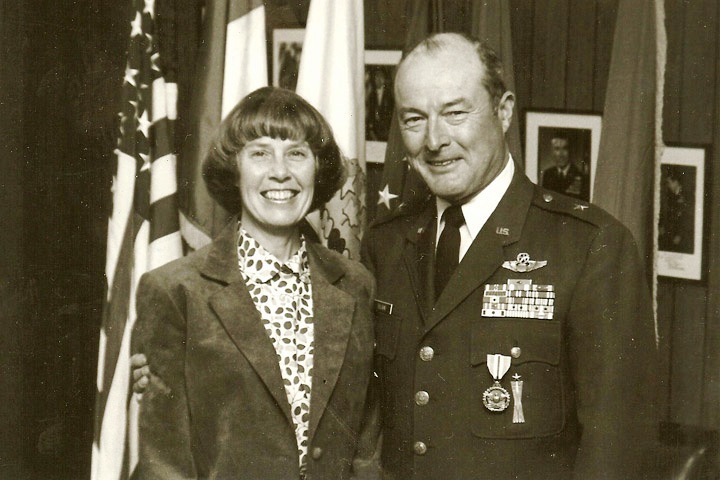 Retirement - 1983 |
 Dennis & Rose Marie |
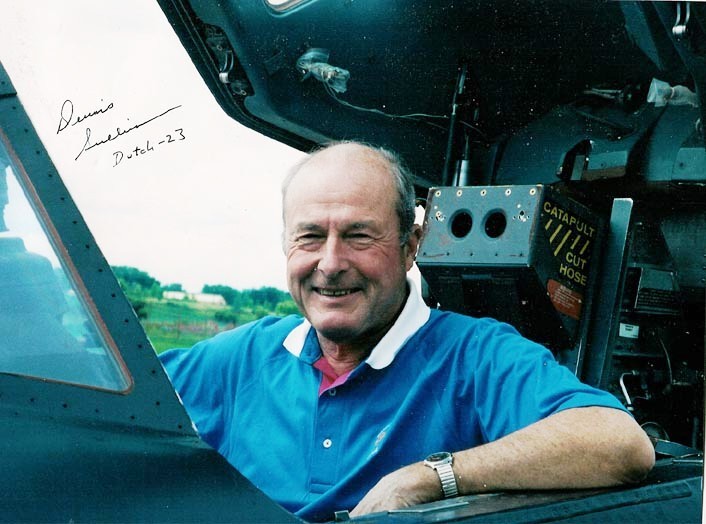 Dennis remembering earlier times |
 Son Dan & Wife Willa - Salem, MA | 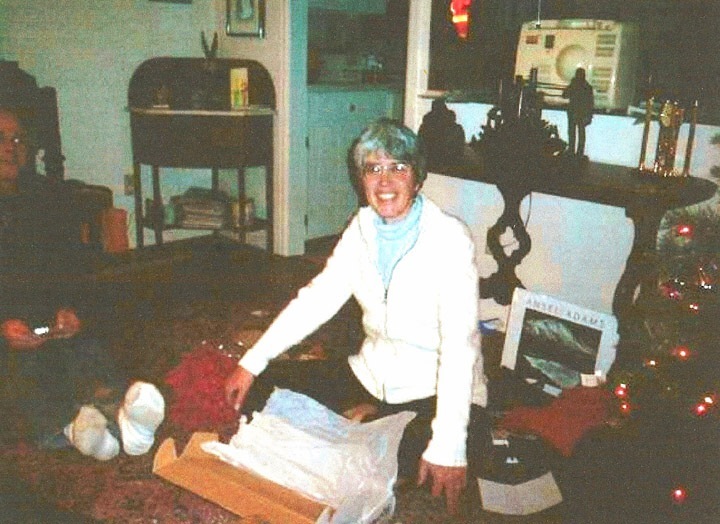 Daughter Kathy |
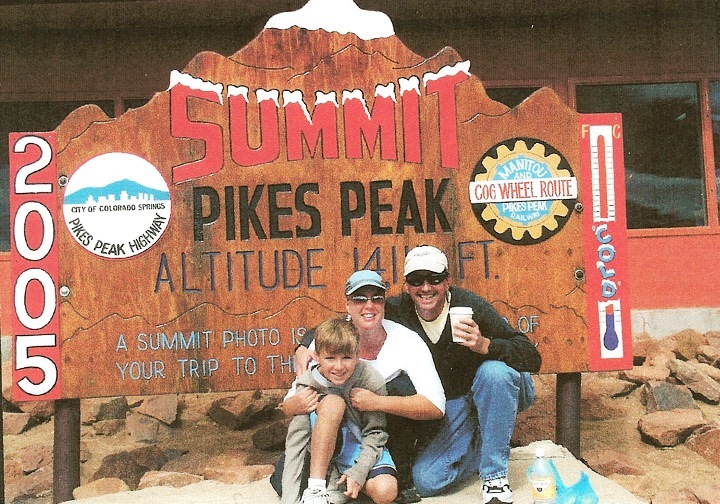 Daughter Maureen & family - Phoenix |
 Son Tim & Family - Hong Kong |
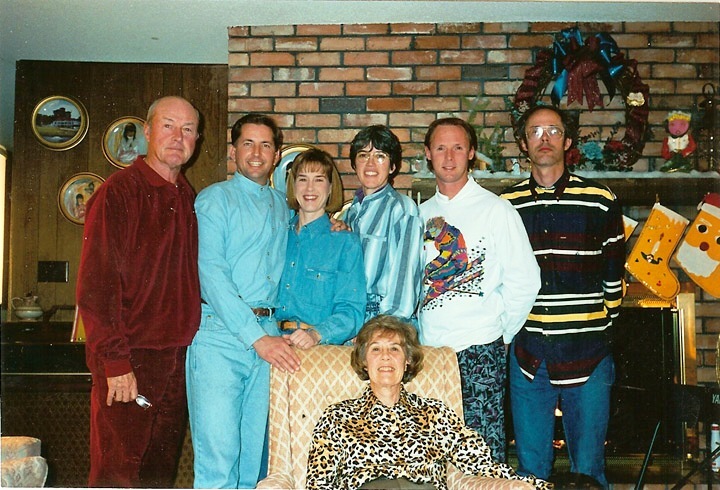 |
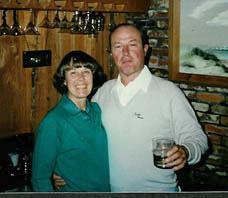 Dennis & Rose Marie - Vegas 1981 |
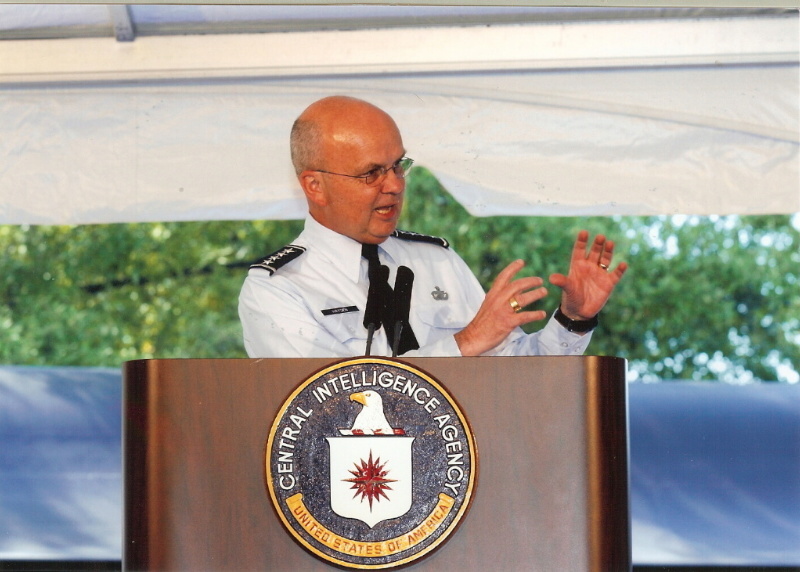
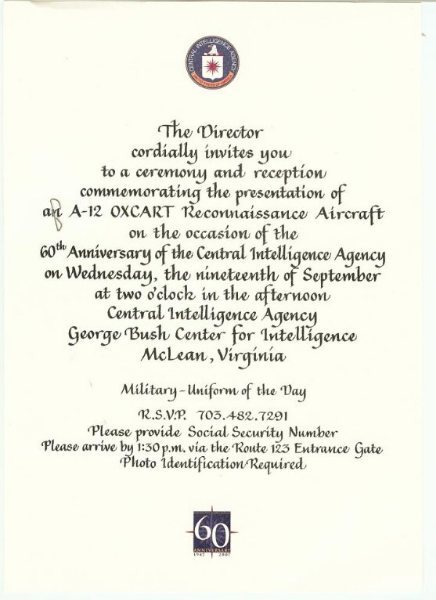
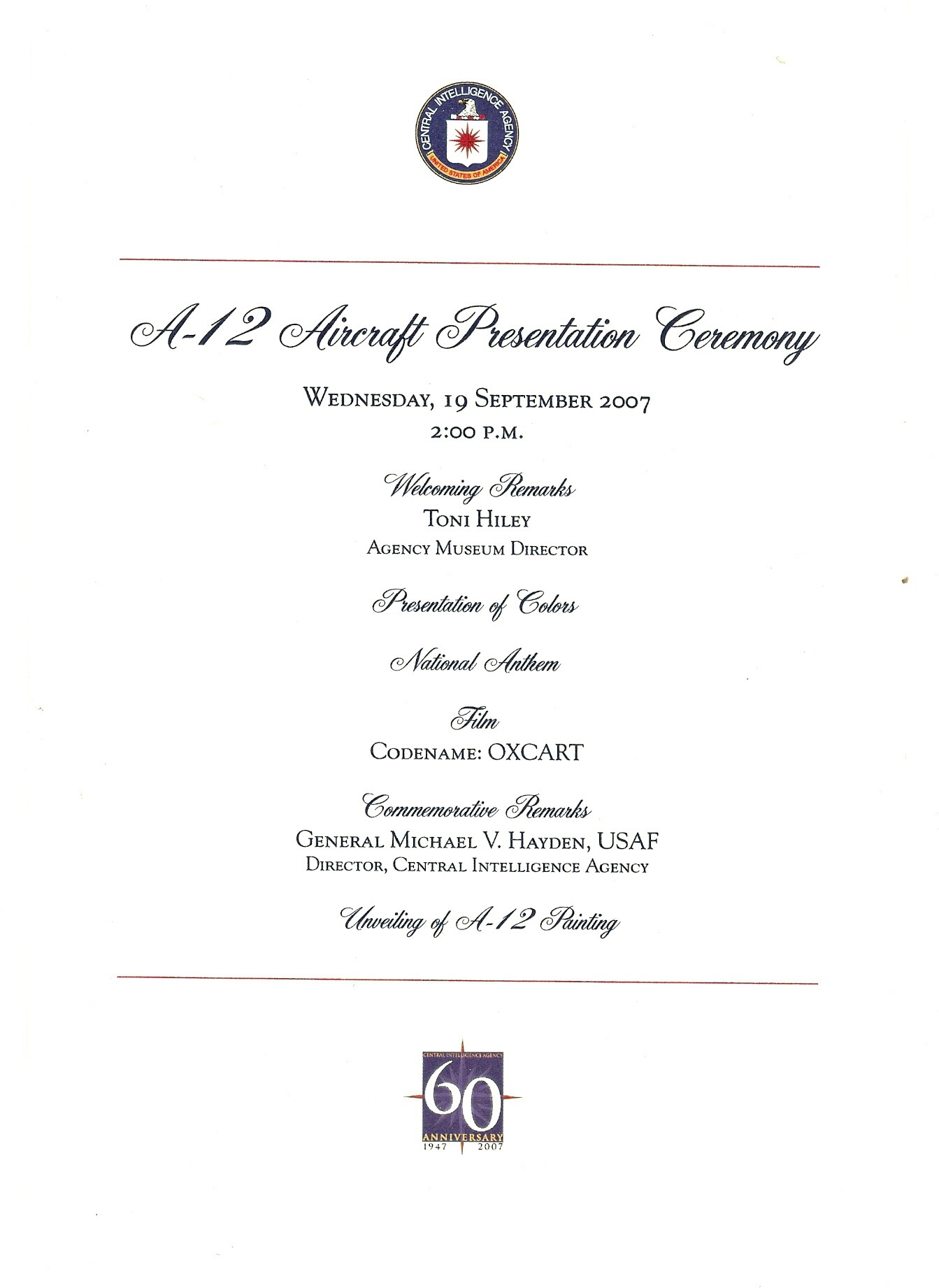
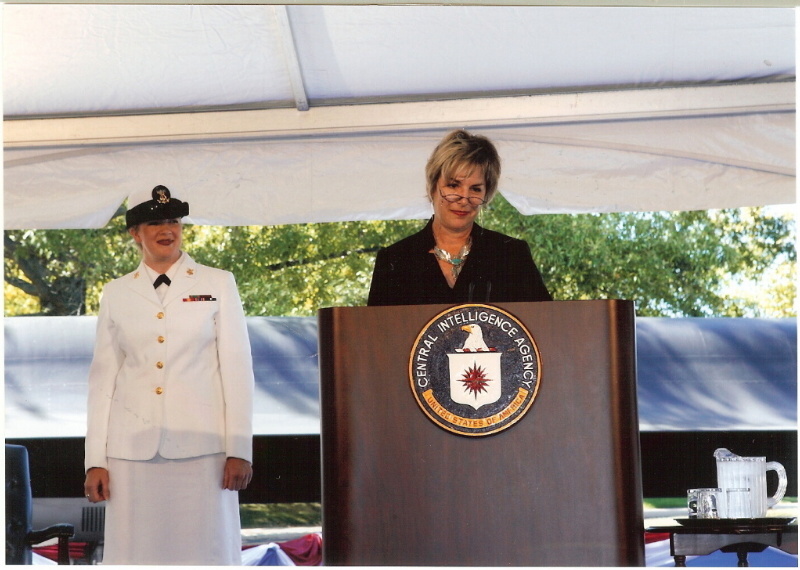
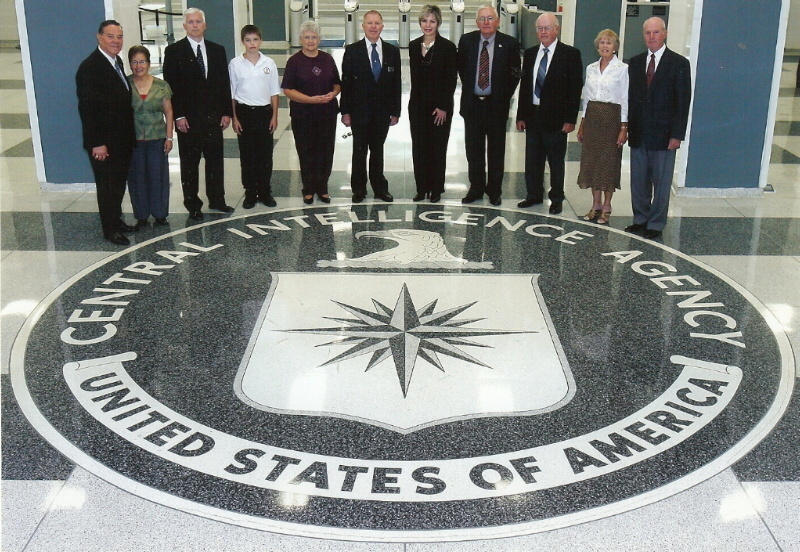
CIA 60TH ANNIVERSARY - 19 September 2007
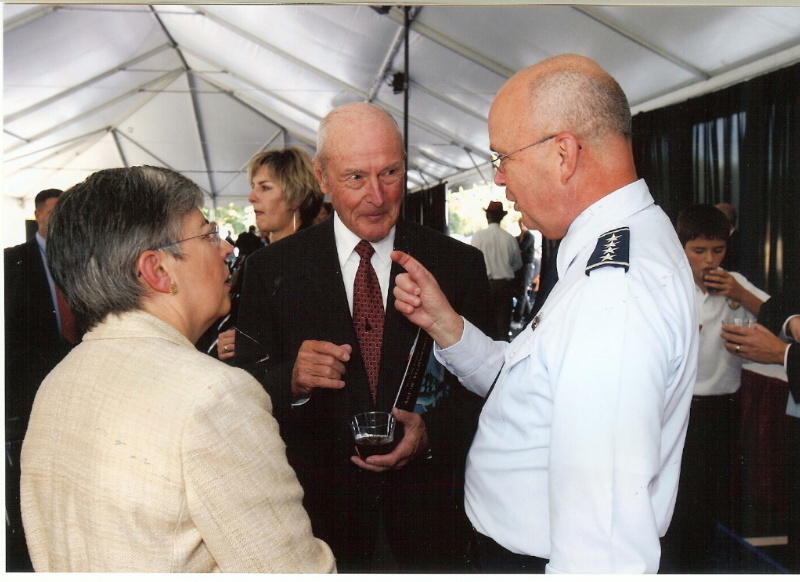
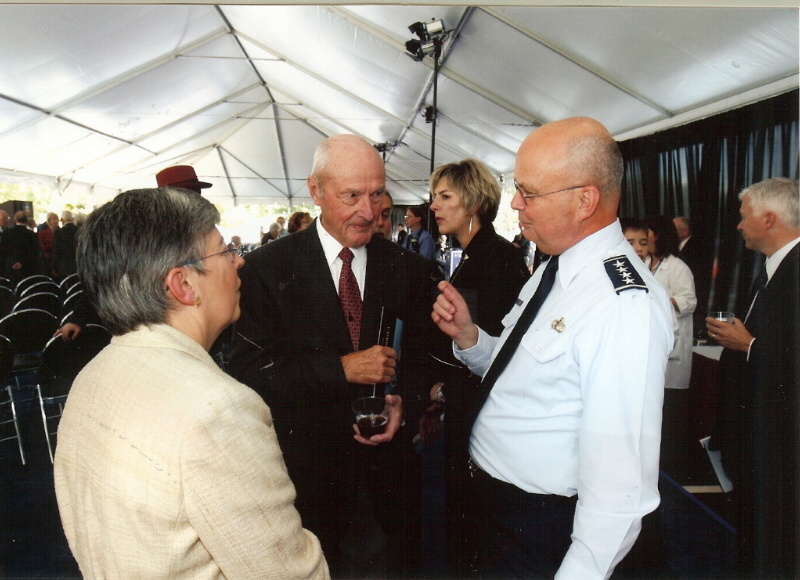
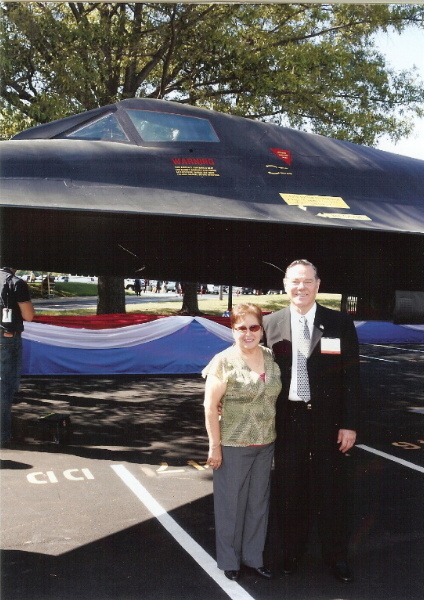
A-12 Project Pilot Dennis Sullivan attending A-12 Article 128 Dedication
|
|
|
|
|
|
|
|
|
|
 |
 |
 |
 |
|
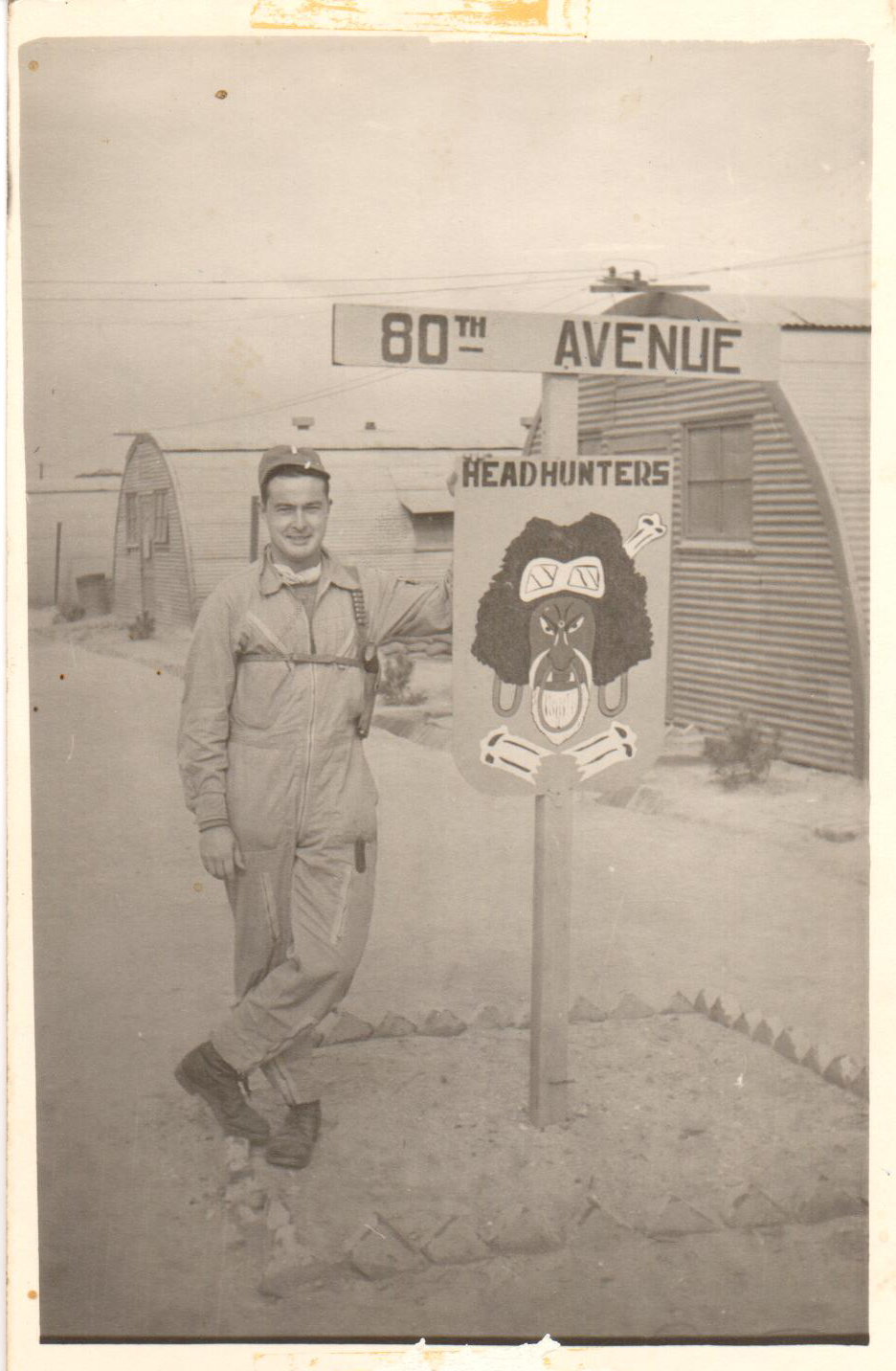
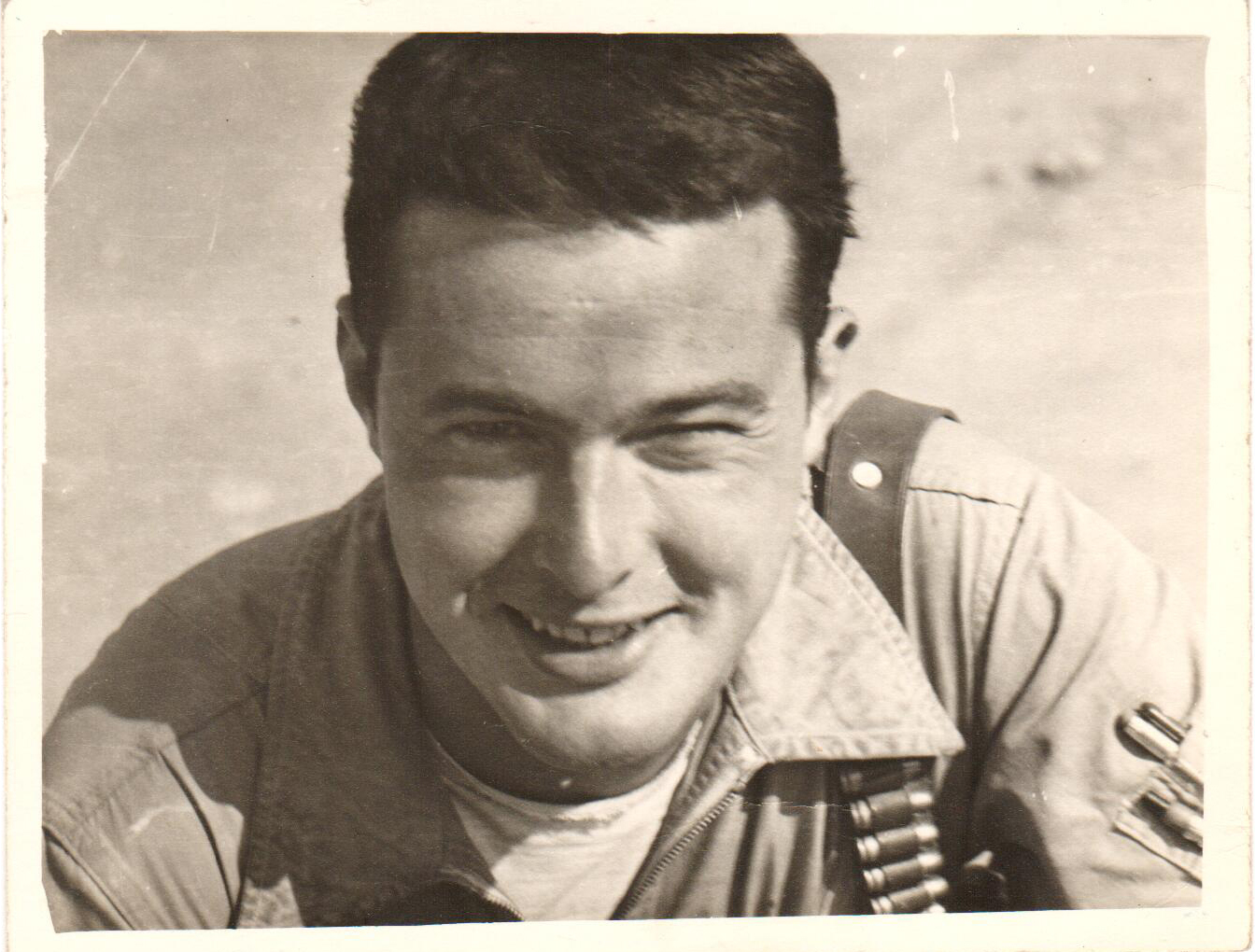
| Dennis Sullivan during his time with the 8th Fighter Wing in Korea... | ||
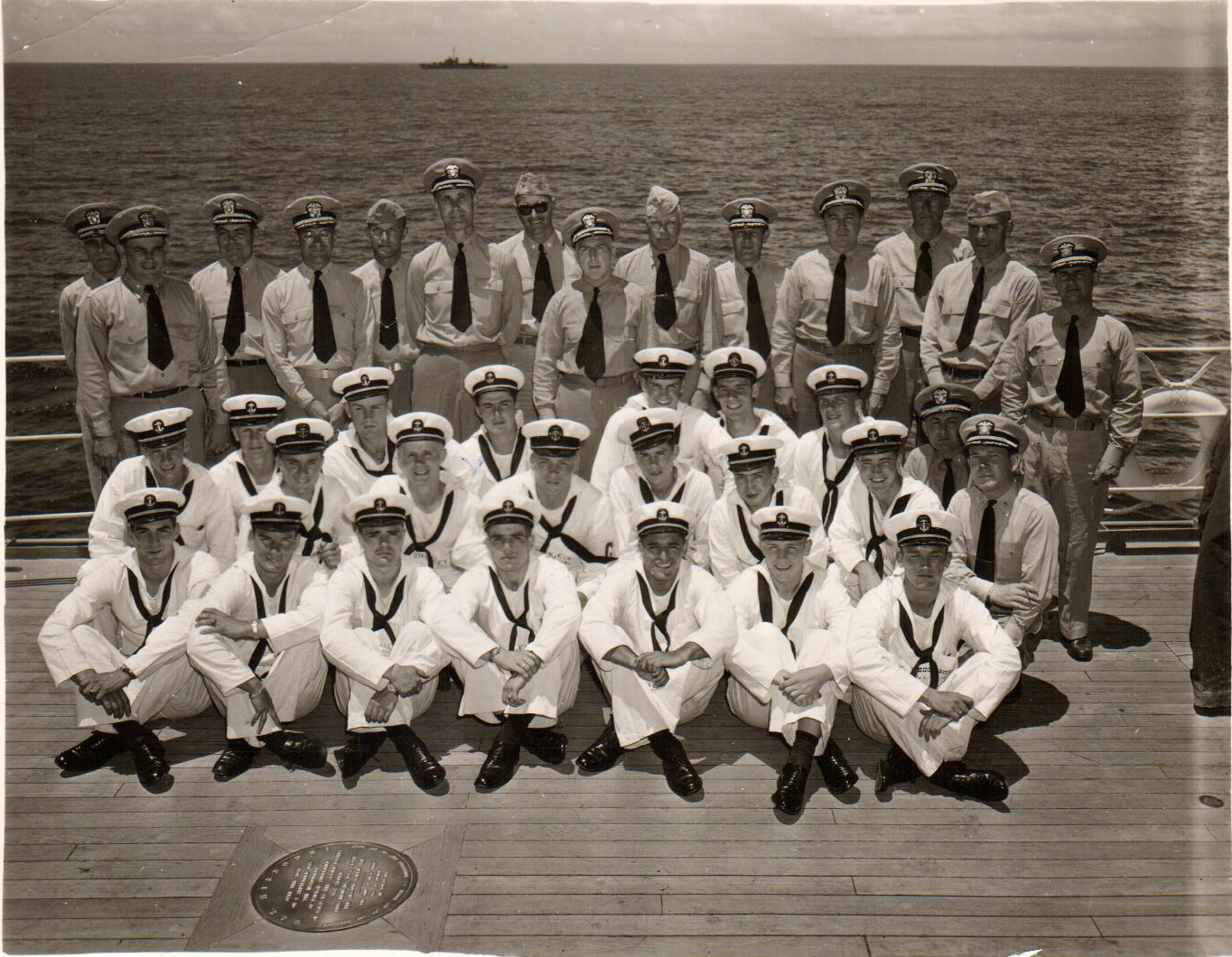
... and on a Naval Cruise while he was in Annapolis (back row, 4th from the left in the white uniform)
>> CLICK HERE << for a pdf brochure regarding Dennis Sullivan's career from his humble beginnings winning a model airplane contest, put together by his nephew Scott Sullivan
 >> CLICK HERE << for a Veterans Day Tribute video for Dennis Sullivan
>> CLICK HERE << for a video of Dennis Sullivan's life in pictures "Forever in out hearts and our memory"
06/01/2016: According to today's obituary posting in the Colorado Springs Gazette, Rose Marie Sullivan, spouse of CIA A-12 pilot BGen Dennis Sullivan passed away on 17 May 2016. According to her obituary, she is survived by her husband, Dennis, her 4 children, Dan, Kathy, Tim and Maureen and their families, her sisters-in-law Sharon and Diane and many nieces, nephews and friends.
A funeral mass will be held at the Cadet Catholic Chapel on the US Air Force Academy on June 8, 2016 at 10 a.m. Donations can be sent in lieu of flowers to St. Jude Children's Research Hospital. - See more at: http://www.legacy.com/obituaries/gazette/obituary.aspx?pid=180180042
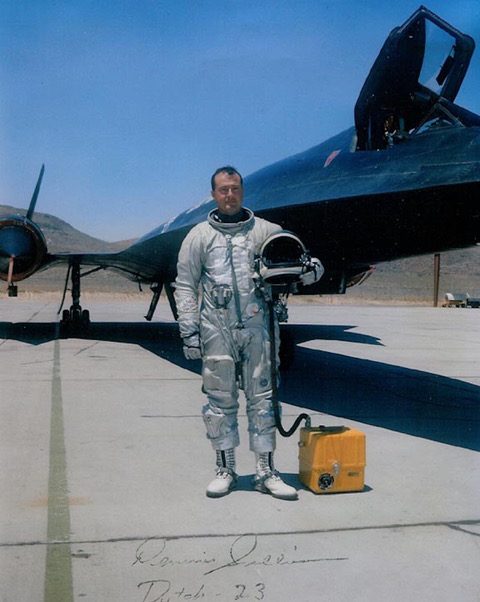 My sad duty is to inform the Central Intelligence Agency, US Navy, the US Air Force and friends that today, 14 December 2020 of BGen Dennis B. Sullivan's final flight.
General Sullivan was born in 1927, in Chippewa Falls, Wis., where he graduated from McDonell High School in 1944. In 1946 he entered the US Naval Academy at Annapolis, Md., graduating in 1950 with a Bachelor of Science degree and a commission as a second lieutenant in the US Air Force. He received a master's degree in international affairs from The George Washington University, Washington, DC, and is a graduate of the Advanced Management Program for Executives, Carnegie-Mellon University in Pittsburgh, the Air Command and Staff College at Maxwell Air Force Base, Ala., and the National War College, Fort Lesley J. McNair, Washington, DC.
Sullivan's initial pilot training began in June 1950 in T-6s at Randolph Air Force Base, Texas, and continued in F-80s at Williams Air Force Base, Ariz., and Nellis Air Force Base, Nevada.
In January 1952, Sullivan joined the 80th Fighter-Bomber Squadron, 8th Fighter-Bomber Wing in South Korea, where he flew 100 combat missions in F-80s.
After completing his tour of duty in South Korea, he transferred to Truax Field, Wisconsin, and flew F-86 Sabrejets and F-102 Delta Daggers with the 126th, 432nd, and 323rd Fighter-Interceptor squadrons.
In October 1957, he moved with the 323rd Fighter-Interceptor Squadron to Harmon Air Force Base, Newfoundland, where he continued flying F-102s until September 1960. Following graduation from the Air Command and Staff College in July 1961, General Sullivan served with the 318th Fighter-Interceptor Squadron at McChord Air Force Base, Wash., flying F-106s.
According to Sullivan's official general officer bio, from June 1963 to August 1968, General Sullivan was a special projects officer at Headquarters US Air Force, Washington, DC. In reality, Sullivan had been sheep-dipped from the US Air Force to the CIA at Area 51 for the Mach 3 A-12 Project Oxcart. Known as Dutch 23, Sullivan first flew the A-12 on 14 April 1963. In 1967, Project OXCART went operational with Sullivan and five other Agency pilots rotating between Area 51 and Kadena, Okinawa, for Operation BLACK SHIELD.
On 19 July 1967, Sullivan flew CIA Mission BX6709 in A-12 Article #131 at Mach 3.17 and 82,000 feet over North Vietnam for 4:58 hours. The imagery quality was excellent.
On 28 October 1967, Sullivan flew CIA Mission BX6732 again in A-12 Article #131 at Mach 3.15 and 83,500 feet over North Vietnam for 3:49 hours. The imagery quality was good.
On 30 October 1967, Sullivan flew CIA Mission BX6734 in A-12 Article 129 at Mach 3.20 and 85,000 feet over North Vietnam for 3:44 hours. The imagery quality was good.
During this 30 October 1967 flight, Sullivan detected radar tracking on his first pass over North Vietnam. Two sites prepared to launch missiles, but neither did. The North Vietnam air defense fired at least six missiles at Sullivan's plane during the second pass, each confirmed by missile vapor trails on mission photography. Sullivan saw these vapor trails and witnessed three missile detonations. Post-flight inspection of the aircraft revealed that a piece of metal had penetrated the lower right wing fillet area and lodged against the wing tank's support structure. The fragment was not a warhead pellet but may have been a part of the debris from one of the missile detonations observed by the pilot. The pellet is on display in the CIA Museum at Langley, Virginia.
In August 1968, Sullivan rejoined the US Air Force for an assignment to Headquarters Aerospace Defense Command, Ent Air Force Base, Colorado, as chief, Test Branch, Weapons Division. He attended the National War College and concurrently earned his master's degree in international affairs from The George Washington University from August 1969 to August 1970.
General Sullivan served from August 1970 to August 1972 as director of operations and later vice commander of the 9th Strategic Reconnaissance Wing at Beale Air Force Base, California, the only Air Force unit flying the SR-71 "Blackbird" strategic reconnaissance aircraft. He then moved to Air Training Command as vice commander of Chanute Technical Training Center, Chanute Air Force Base, Ill., where he served for three years.
In July 1975, General Sullivan took command of the only navigator training wing in the Air Force, the 323rd Flying Training Wing at Mather Air Force Base, Calif. From September 1976 to July 1978, he became the deputy chief of staff for operations at Air Training Command headquarters, Randolph Air Force Base. Sullivan received a promotion to brigadier general on 1 February 1977, with a date of rank of 24 January 1977. He was responsible for monitoring and providing staff support to pilot, navigator, and survival training programs at 11 bases and several detachments in this position. He then took command of the 12th Air Division at Dyess Air Force Base, Texas.
In September 1981, Brigadier General Dennis B. Sullivan was a command director in the Cheyenne Mountain Complex for the North American Aerospace Defense Command, headquartered at Peterson Air Force Base, Colo.
General Sullivan is a member of the Society of Experimental Test Pilots and a command pilot with 7,000 flying experience hours. His military decorations and awards include the Legion of Merit with one oak leaf cluster, Distinguished Flying Cross with oak leaf cluster, Meritorious Service Medal, and Air Medal with two oak leaf clusters.
In 2011, the Wisconsin Aviation Hall of Fame - EAA AirVenture Museum in Oshkosh, Wisconsin inducted General Sullivan into the Wisconsin Aviation Hall of Fame.
The family is not scheduling services at this time due to the Covid-19 pandemic.
 |
 |
 |