|
|
|
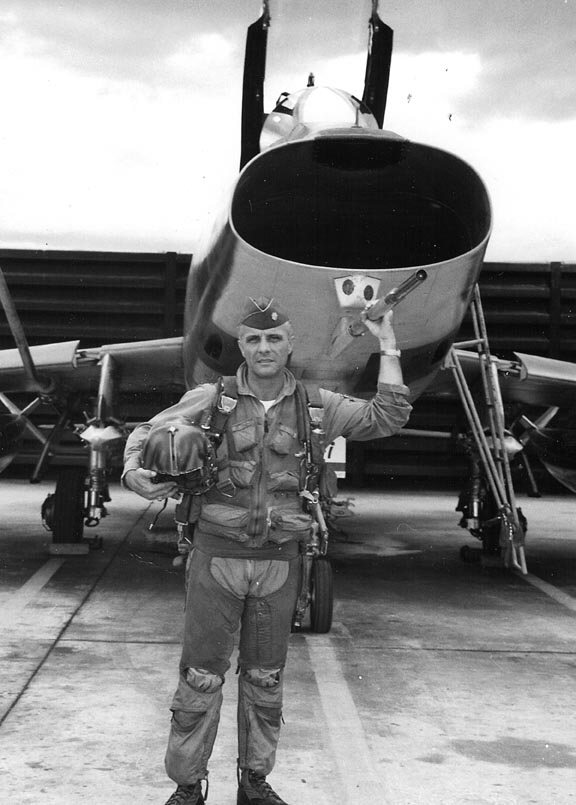
As a commissioned officer in the United States Air Force, I flew 309 F-100 combat missions in Vietnam for which I was awarded the Distinguished Flying Cross and the Air Medal with 10 Oak Leaf Clusters. Prior to that I participated in a project in Nevada that to this day does not officially exist. To appreciate where I've been and things I've done, you need to know about me from the start.
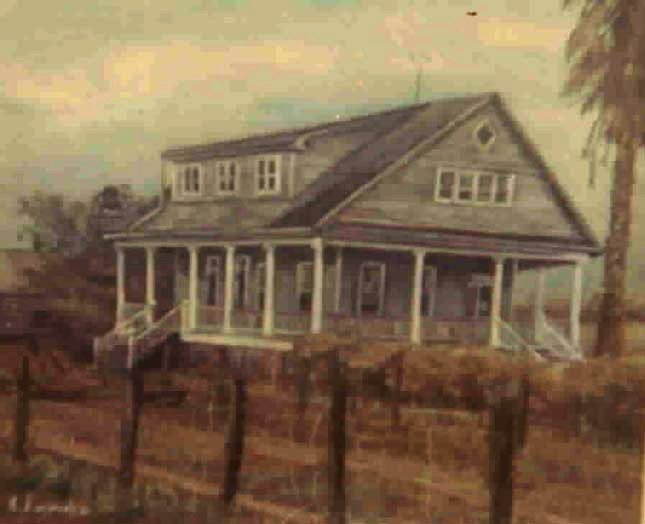
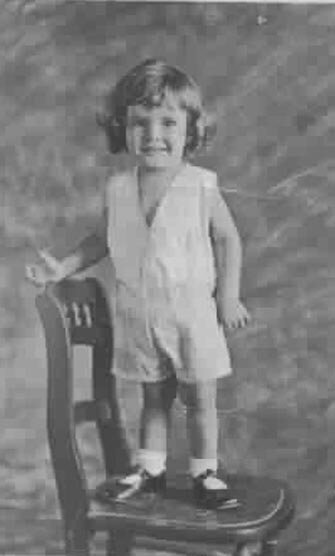
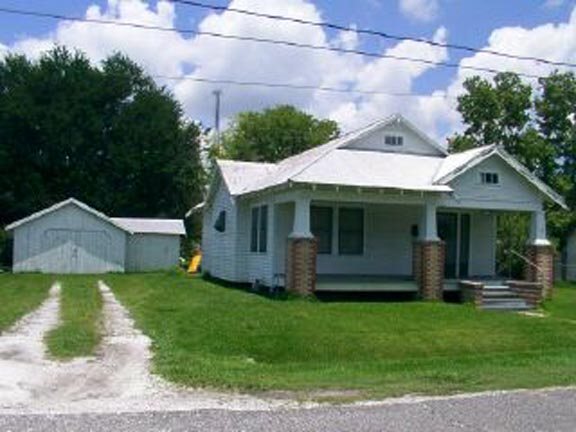
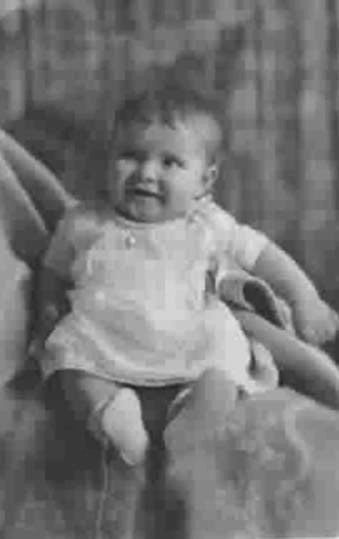
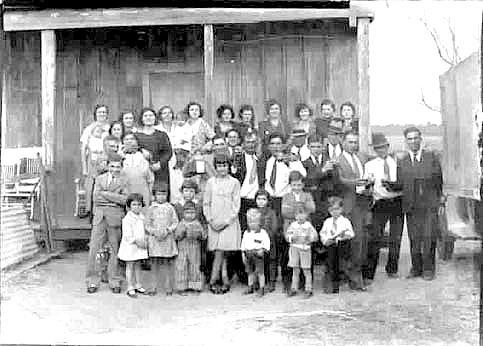
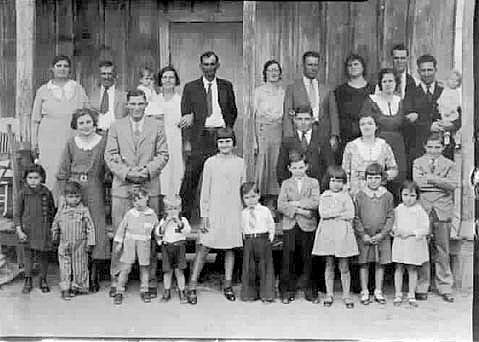
I was born an only child to a poor couple on July 23rd, 1930, delivered by a mid-wife. Both my mom and dad were out hustling through rough times brought on by the depression. My grandfather on my mom's side had a sugar cane plantation and my grandfather on my father's side was a genuine 'blacksmith"-- a good one!
 |
 |
 |
 |
 |
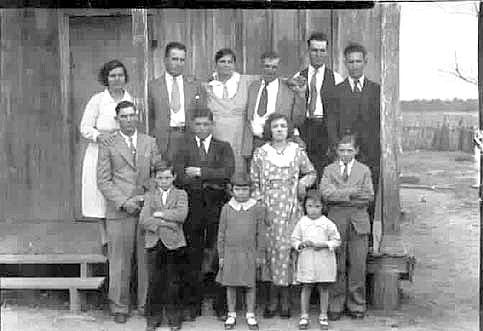 |
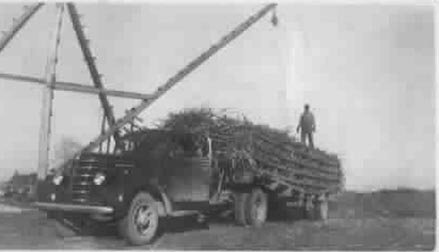
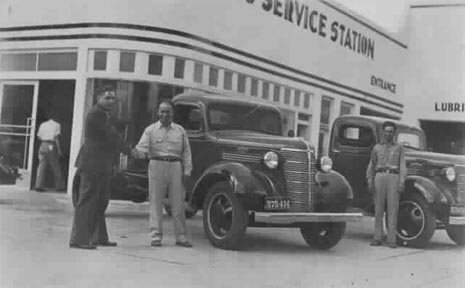
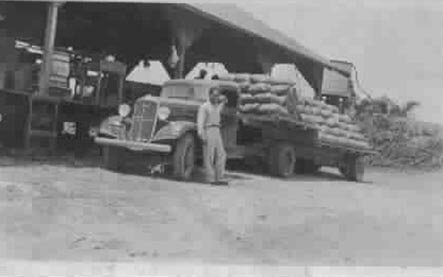
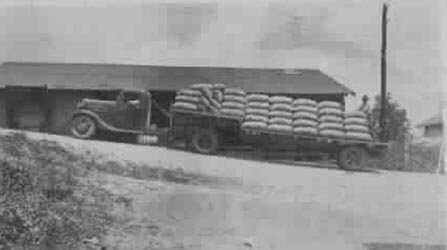
My mom worked as a clerk in a nickel and dime store (F W Woolworth) and dad had one truck. To earn a living, he purchased bulk farm produce from various small farmers and used this truck to deliver the produce to the open-air French market in New Orleans. My godfather and his dad had a couple stalls where they allowed my dad park the truck and sell to the general public from the back of it. That market is still in full swing today.
|
|
|
|
|
|
|
|
|
|
|
The word got out that my dad was a good man to do business with so before he knew it, others were interested in his hauling various things to market including cattle. of course, he was obligated to haul sugar cane to the mill for my grandfather.
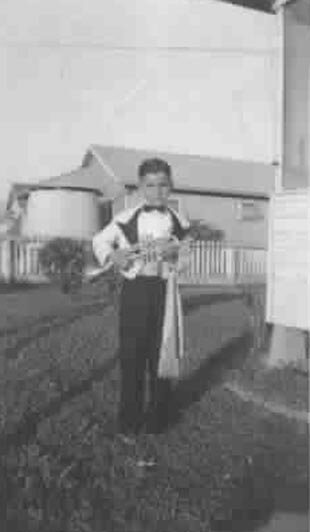
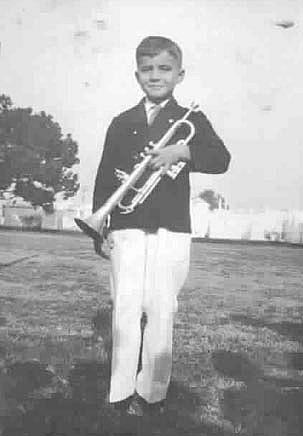
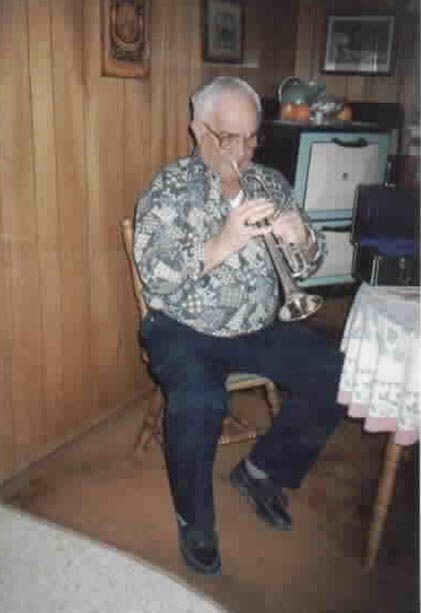
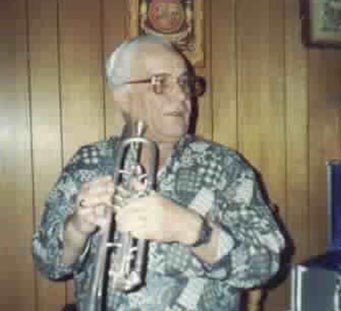
At age 5, my mother wanted me to learn music. She found a music teacher, and based on recommendations from the teacher, she bought me a trumpet to learn to play. I started parochial school at age 6 and played in a small school band where my teacher was also our band leader.
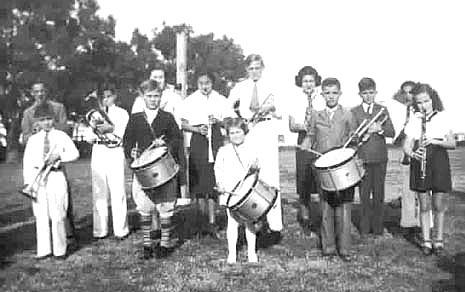
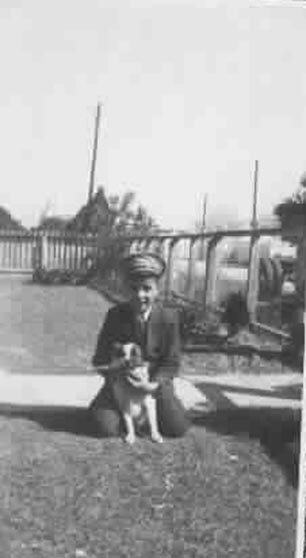
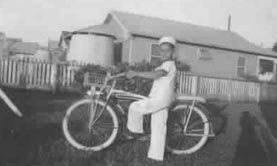
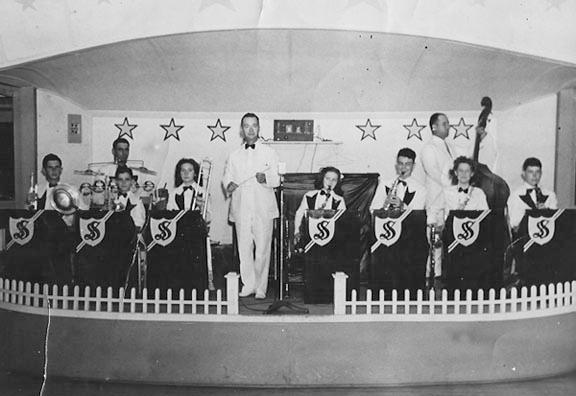
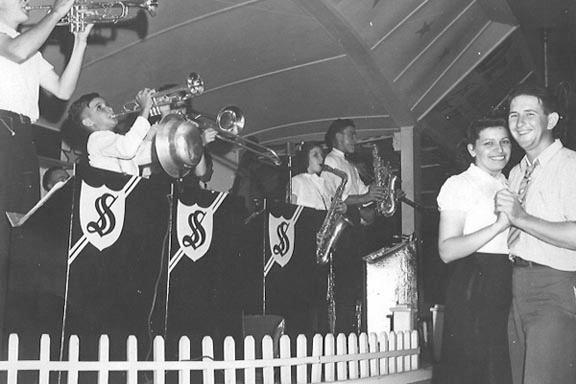
My mom and dad were getting interested in my music and would take me to various amateur contests primarily in New Orleans. The one that comes to mind is the Lafayette Theatre on Baronne Street where each Friday night an amateur night was held with a small cash prize awarded to the winners (1st, 2nd and 3rd place). The first place award was something like $3.25 on down to the others...My folks were hoping that I would someday qualify for "Major Bowles amateur hour" on radio, but it never happened. Then, my dad and a neighbor of ours, whose daughter was approximately the same age, got together with the music teacher and decided to check the feasibility of forming a "big band". We got our act together and before you know it, a 10-piece big band was formed and the "Star Serenaders" were all practicing and learning different tunes (fast, foxtrot and waltzes). Then, about 1937, we were hired out to play in dance halls, night clubs, etc. The pay per player was not too great, $4 to $6 each dependent on age, family status, and expenses by vehicles to haul the instruments. Fortunately, my father had a good ear for music and he was also hired to play the base fiddle. I had no expenses, so I pleaded with my parents to allow me to buy a two-wheeled bicycle and they refused, then a Red Ryder BB rifle and they refused, then to have my own puppy. Finally they gave in on the puppy, though "Teddy" had to remain outdoors. The poor little guy was loaded with fleas, so my mother said "no way" to his entering the house.
|
|
|
|
|
|
|
|
|
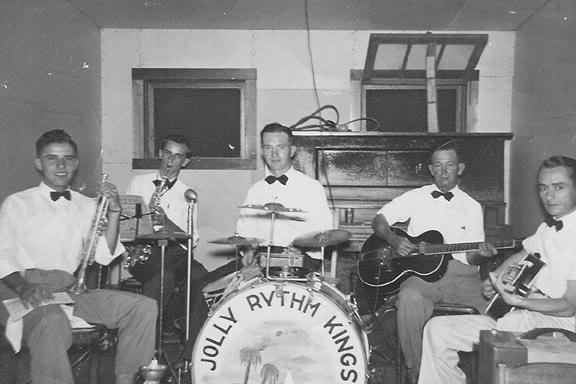
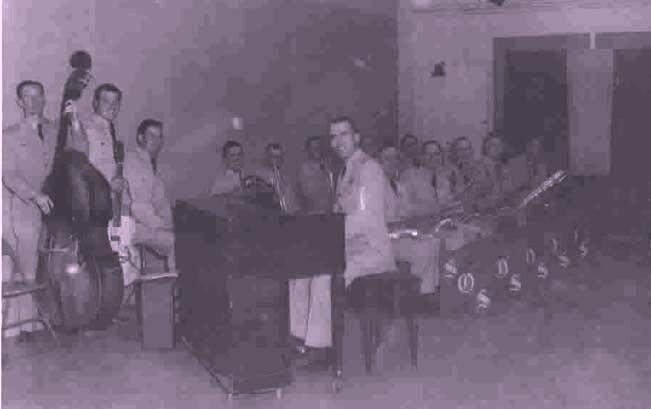
There were A, B and C stamps handed out, but a dance band did not qualify for any of them. My mom had an "A" stamp for her car, but my dad had "C" stamps for his trucks. Dad managed to siphon some gas from the trucks and got by that way, but, again, it was tough. The teacher became ill and we had to stop playing. I continued with my schooling and graduated from high school on May 28, 1947. Five of us then got together and formed a 5-piece combo to make some extra money for the summer as I awaited enrollment at Louisiana State University.
 |
 |
 |
 |
This was really bad timing in that I was co-valedictorian of our graduating class. My dad had given me a brand new 1947 Mercury club coupe for doing so well. The principal of my high school, along with my mother, wanted me to become a medical doctor. I was awarded three scholastic scholarships and later my dad was able to get 4 legislative grants from one of the state senators. All the while, my dad was trying to get me to take over the trucking business that had grown to 4 big trucks with trailers. After he wore out the new 1938 Chevies, he found that the International Harvester Company had a better suited truck for the big time hauling that he was doing and he made the switch by trading in all the Chevies for Internationals. He had even gone as far as equipping one for me to drive through the summer.
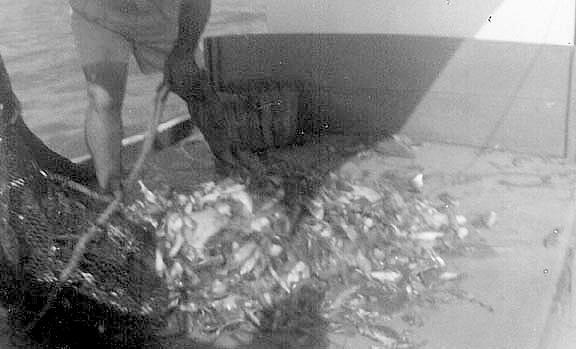
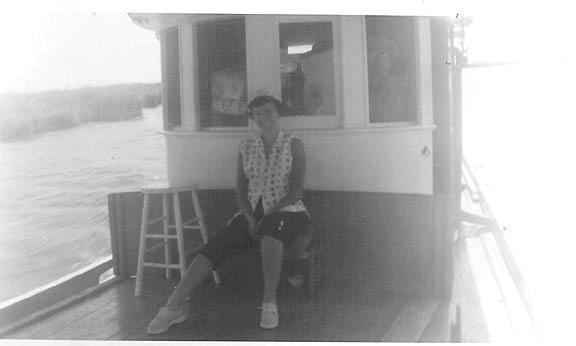
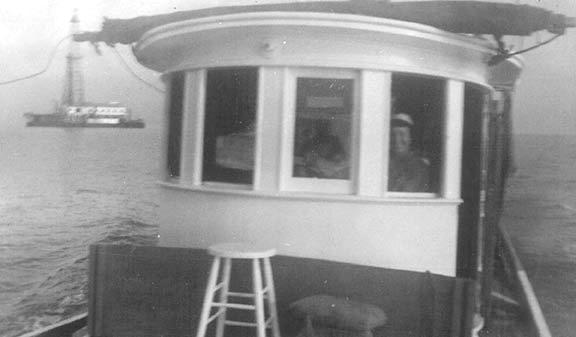
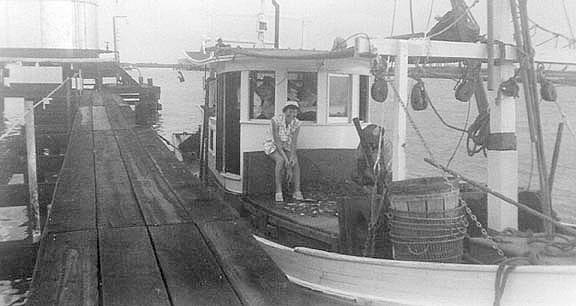
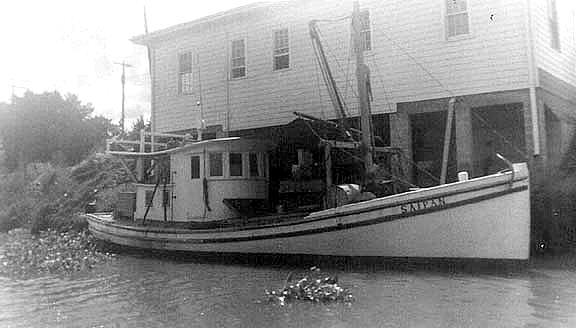
My dad showed me how to make money with the rig. but, with my mother on my side, I was off to LSU during September of 1947 for enrollment in my freshman year. He sold all the trucks and went out of that business to purchase a 45-foot shrimp trawler boat and remained a commercial fisherman till his retirement at age 65.
I saw both my parents simultaneously cry when we pulled up in the car to the administration building where I was instructed to go for enrollment. As soon as I got out of the car, the Upper Classmen were right there at the curb with clippers to do away with all the hair I had on my head. Needless to say, that was the last of my playing trumpet with the "Jolly Rhythm Kings".
After my first year pursuing pre-med, I recognized that it would not work because I could not stand the sight of blood and continue to stay standing. I would feel faint right away. Then, I changed to an engineering major. LSU was a "land grant" school, so I was forced to enroll in Army ROTC for the first two years. The second two years was an option. I took US Army ROTC for the first two years and opted to enroll in US Air Force ROTC for junior and senior years.
 |
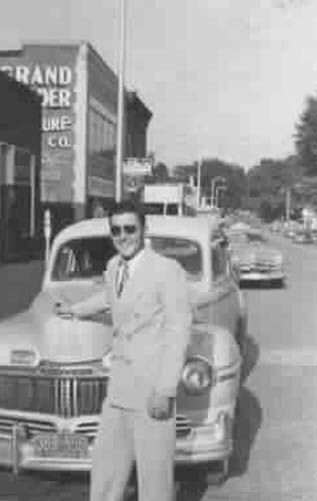 |
The Korean conflict began and I was trying to get over there; but I did not want to go in the ground forces so, I continued with the ROTC instructions. In 1950, the curriculum called for my classmates and me to go to an Air Force installation for "summer camp". I was directed to go to Chanute AFB, Illinois. I drove my little Mercury up to the base and had some free time to visit the big city of Chicago to the north, Champaign/Urbana to the east of Rantoul, Danville and a few other small cities in the area. We had never met northern girls and they were reluctant to meet boys from the deep south.
All in all, a lot of fun was had by all. The training we received was also great and a lot of fun. I was so "gung ho" that if someone would have allowed me to put on a flight suit, gave me a chute and pointed me to a T-33,F-80 or an F-86, I would have taken them up on it right then! I doubt that I could have brought it back, but it would have been great to try.
During the fall semester of 1950, the Defense Department made changes to our contracts in the ROTC program. Initially, if you had successfully completed the 4 years and summer camp of collegiate ROTC instructional training, you would be commissioned a 2nd Lt immediately thereafter--not so anymore. It was then required that you had to get a bachelor's degree and when the ROTC courses had been completed, you would be commissioned at that time.
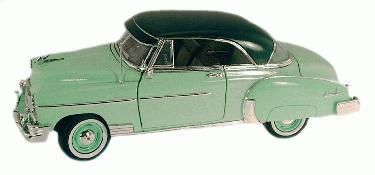
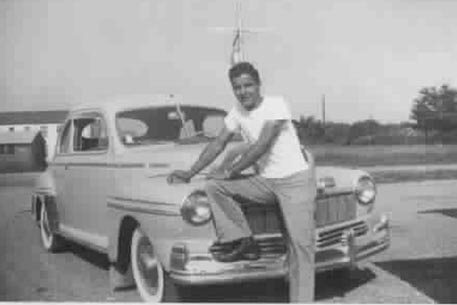
While studying, one morning, in my dormitory room, I received a call from my dad that he wanted me to drive my little 1947 Mercury to a Chevrolet dealership (Fauchaux Chevrolet) in Lutcher, Louisiana, which was about half way between Baton Rouge and New Orleans right on the Airline
 |
 |
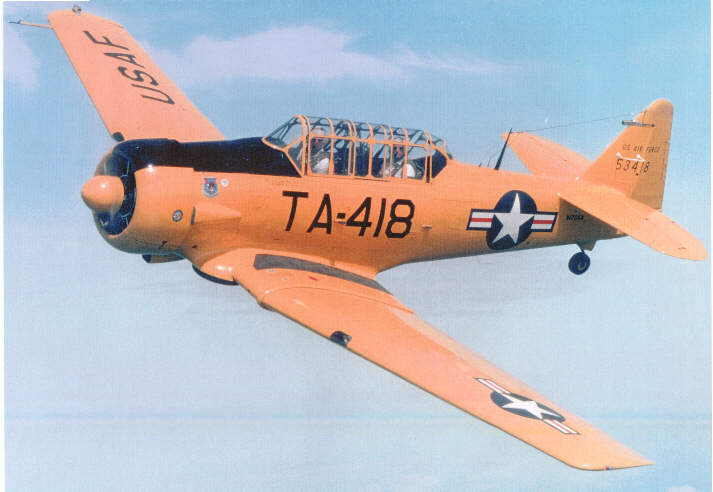
After completing my basic training at Lackland AFB, Texas, I was transferred to James Connelly AFB, Texas to work on the B-25 that they were using there to re-qualify aircrews from WWII who had separated, but were being recalled to active duty. A big drawback for me was the astigmatism in my left eye allowing only 20/30 vision. I lucked out there by meeting the base optometrist who took me seriously and helped me reach 20/20 vision for my class one physical. Then, on to Greenville AFB, Mississippi for the primary flight training in the North American Texan (T-6g).
This airplane was a "tail-dragger" and was an easy ground looping machine. One had to be on his toes when taxiing, taking off and especially landing not to ground loop it and take a wing tip off the airplane.
 |
From there I was transferred on to Laredo AFB, Texas for the advanced training in the T-28 and then the T-33 (first jet). wow!!! What a deal all that was. I had an AF captain (a full blooded Indian) that kept me blacked out most of the time in the T-28. I was sort of happy to successfully complete that course and go to the other end of the tarmac for the jet training.
The big day came on Feb 2, 1953 when gold bars were pinned on my shoulders and a pair of silver wings
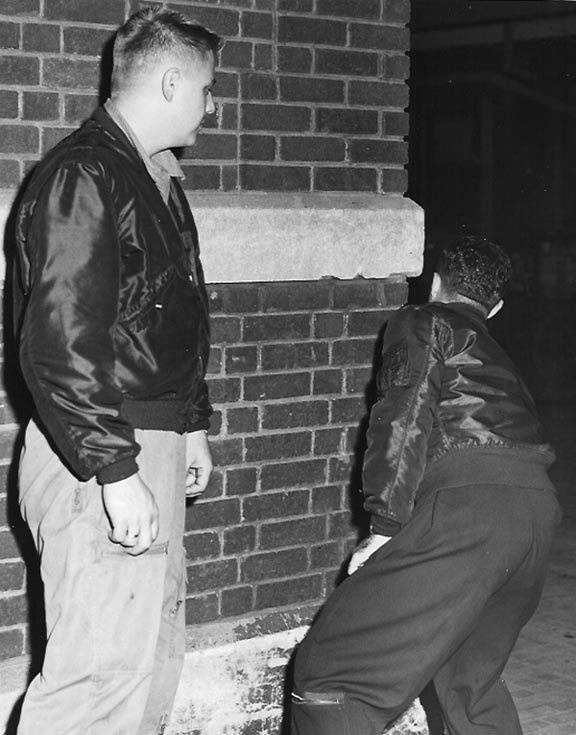
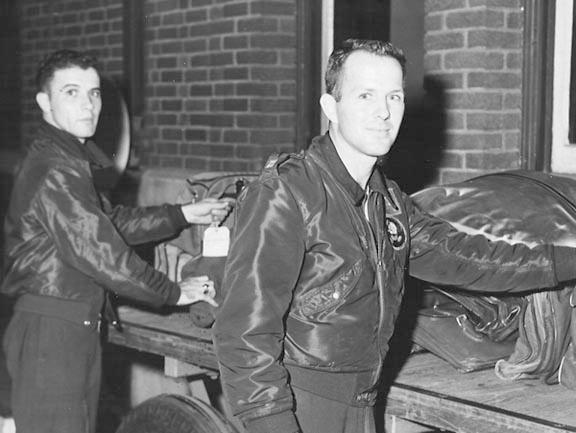
 was pinned on my chest. That was the proudest day of my entire life--none has even come anywhere near since. I wanted to become a genuine fighter pilot so bad and I was worried that I might be assigned to transport or bomber aircraft, but I got what I wanted. The assignment was to strategic fighters (F-84G's) at Turner AFB, Georgia with intermediate stops at Moody for the all
 |
 |
 |
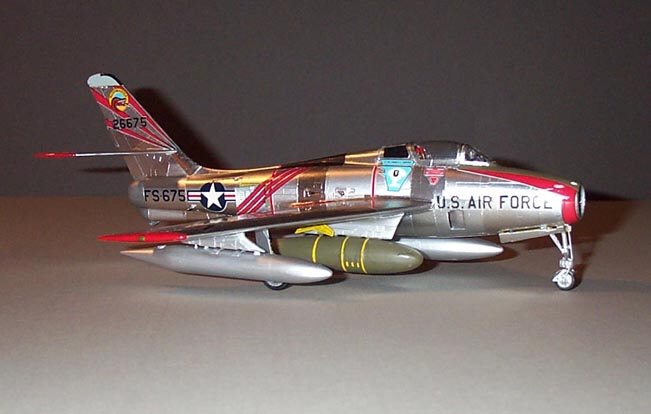
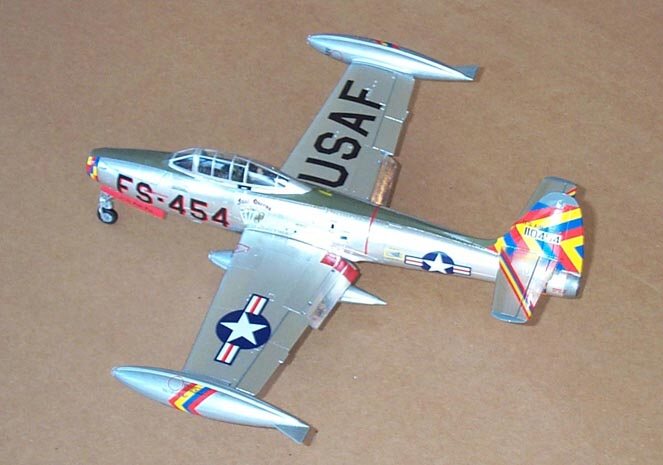
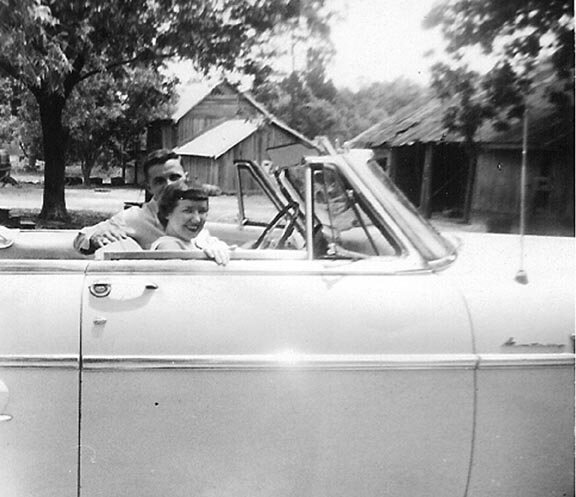
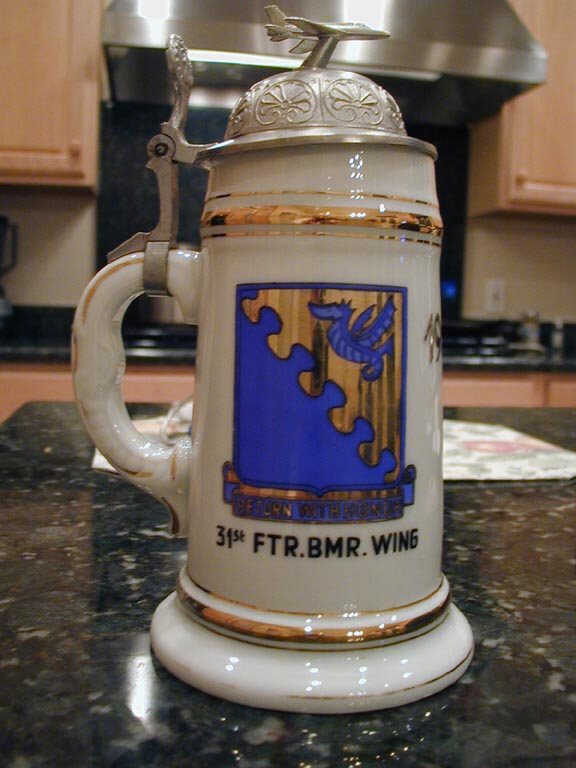
I knew that if I was going to be a jet fighter pilot, I would have to drive the car that went with the title--thus, the 1953 yellow Mercury convertible. Soon, I had completed all of that training and was checking in at Turner's 31st Wing (307th Squadron) to fly the Republic
 |
 |
 |
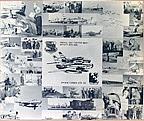 |
Operation Left Hook was an historical event in my Air Force career because of my, during the exercise, being seated next to Maj. Gen. John P. McConnell, SAC Deputy Commander of Plans during a special dinner one evening at SAC Headquarters, Offutt AFB, Nebraska. General McConnell was special to me since he was raised in Arkansas neighboring my home state. The commander of Second Air Force, Barksdale AFB, Louisiana, General McConnell, advanced to 4 stars and served as Air Force Chief of Staff. Another extended mission in which I participated while in SAC was "Operation Oil Burner." Colonel Graham, who later retired as a 3-star general, led a series of F-84F jet aircraft on missions which demonstrated that nonstop air refueled, and night long-range deployments in fighter aircraft were practical. Our operation was tasked with obtaining a cross section of oil consumption of the J-65 jet engine equipped F-84F over extended use. In 1958 I participated in the first nonstop deployment of F-100 aircraft from the United States to Europe, flying non-stop from Myrtle Beach AFB, S.C. to Nouasseur, North Africa.
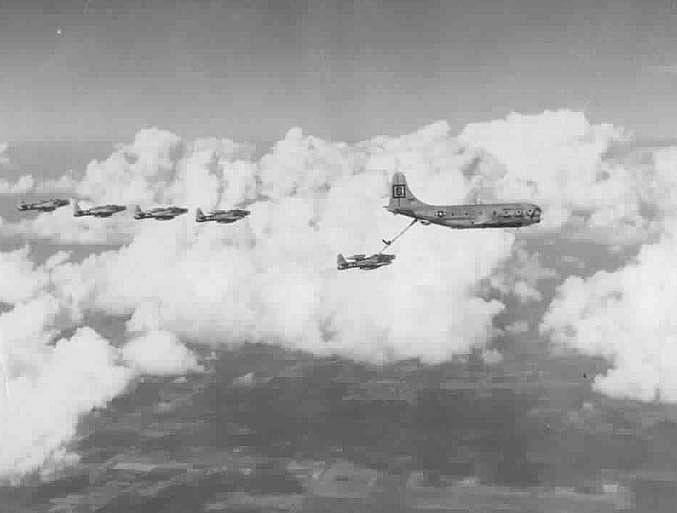
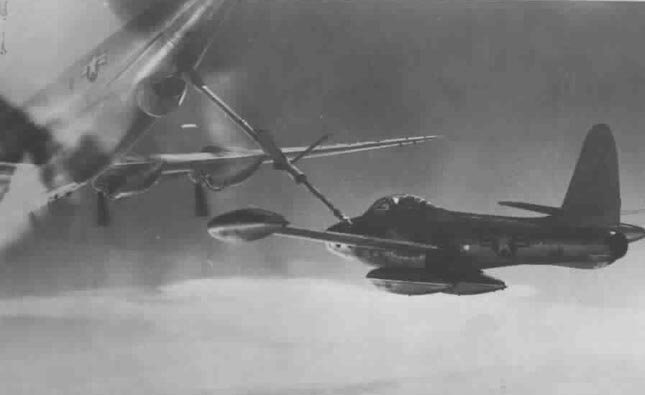
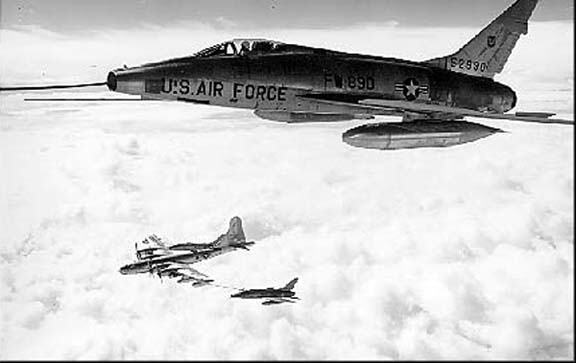
After transferring from SAC to TAC and the F-100 aircraft, my squadron was tasked with practicing air-to-air night refueling on the KB-50. Bill Rippy, another pilot in my squadron, and I coordinated everything for the practice and between the two of us were able to develop the procedure used thereafter by all F-100 pilots using the "probe and drogue system". Learning the night time procedure really helped us in becoming more proficient during the day-light hours. We had had lots and lots of training in the field of air refueling with the KC-97 tankers out of Hunter AFB, Georgia, which was an entirely different method. After that I had a month of TDY to AUX Field 6 at Eglin AFB for gunnery training, both air-to-air and air-to-surface.
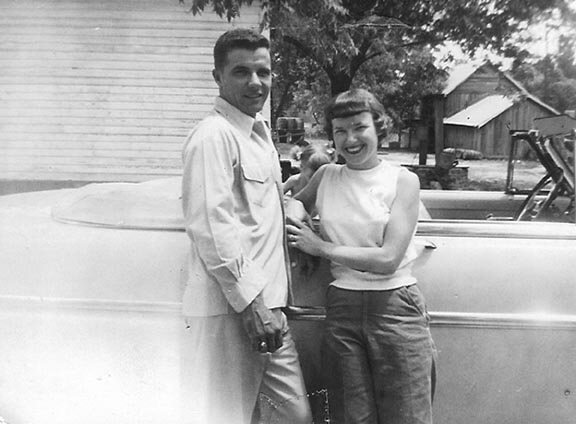
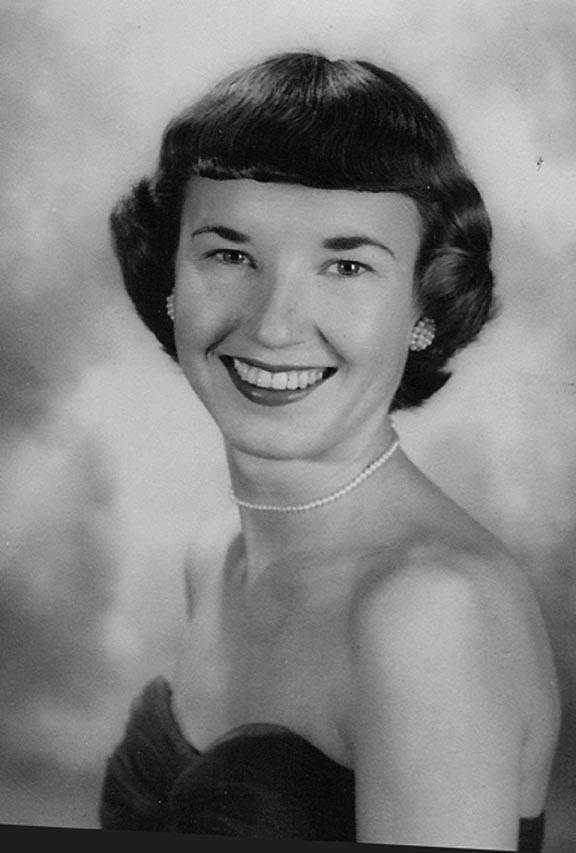
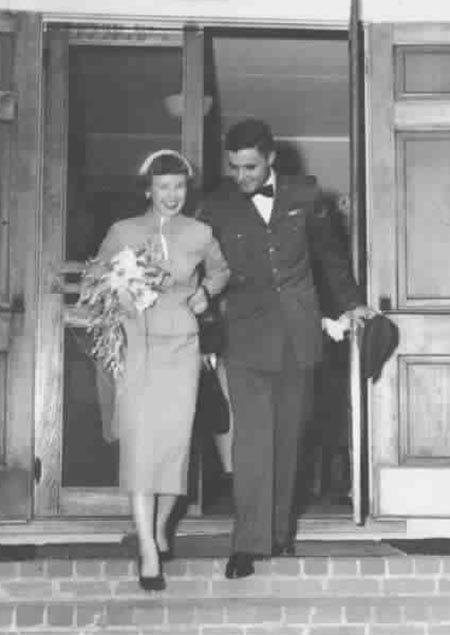
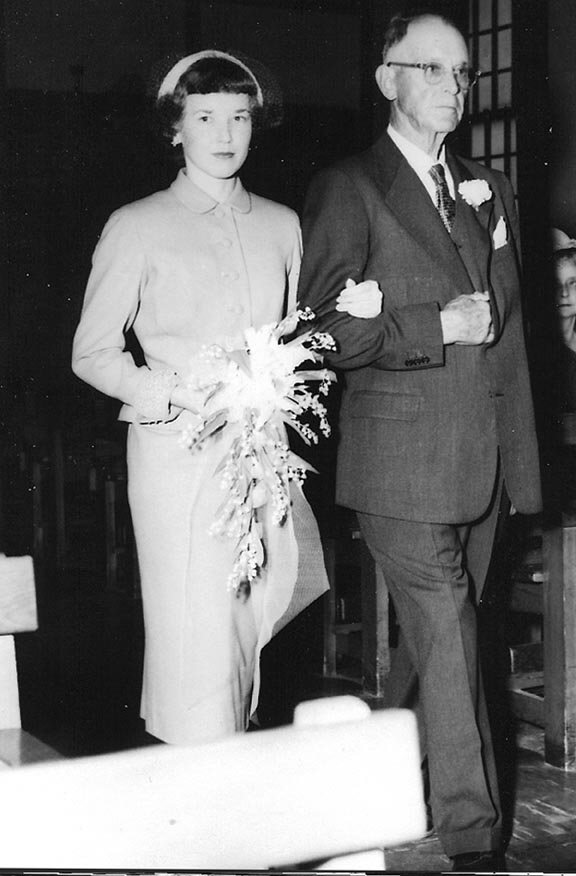
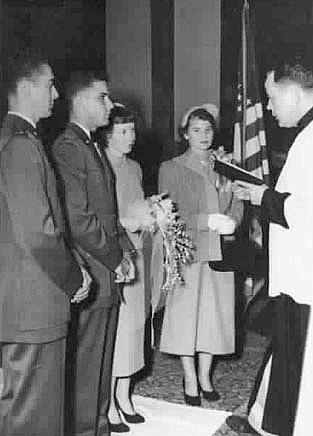
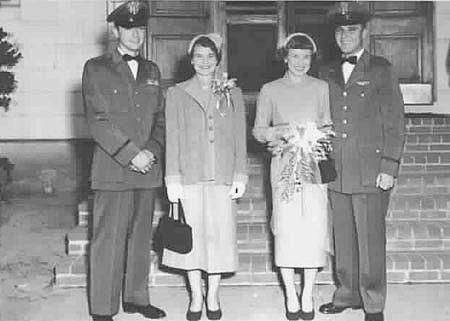
Later, the strategic air command of which we were a part of upgraded us to the republic F-84F (a swept wing model). More of the same training at Aux Field 6, Eglin and to Ramey AFB, Puerto Rico for gunnery training. There, you can believe me, we were well trained to do the assigned mission. Shortly after my arrival at turner in 1953, I met Dorothy Faircloth, a Georgia girl, a registered nurse. We fell in love and married on October 17, 1953.
 |
 |
 |
 |
 |
 |
 |
Approximately 2 weeks after our wedding, I was sent to Misawa AB, Japan for a show of force in the area and remained there for 90 days TDY. Of the 3 squadrons, 2 stayed at Misawa and one was deployed to Chitose on Hokkaido island of the Japanese island chain.
During our deployment in 1953 to Japan, something happened to me and a couple other pilots from the 307th that I, personally, will never ever forget regardless of how long I should stay on the face of this earth. You hear about how the other Services in the Military conduct their assigned duties, but until you witness them first hand, it just does not mean very much. I had the opportunity to witness the U S Army conduct their duties during Exercises that I took part in as a Forward Air Controller at Fort Hood in Texas, but that was nothing compared with what I witnessed with the Navy.
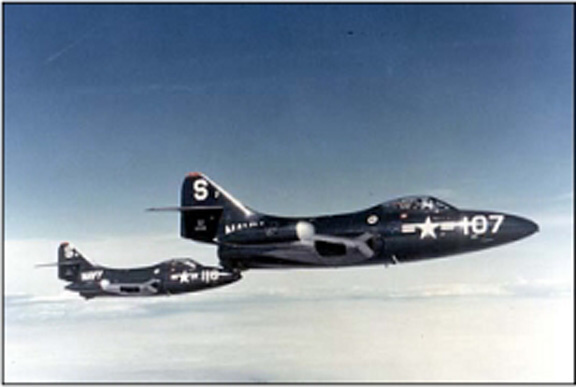
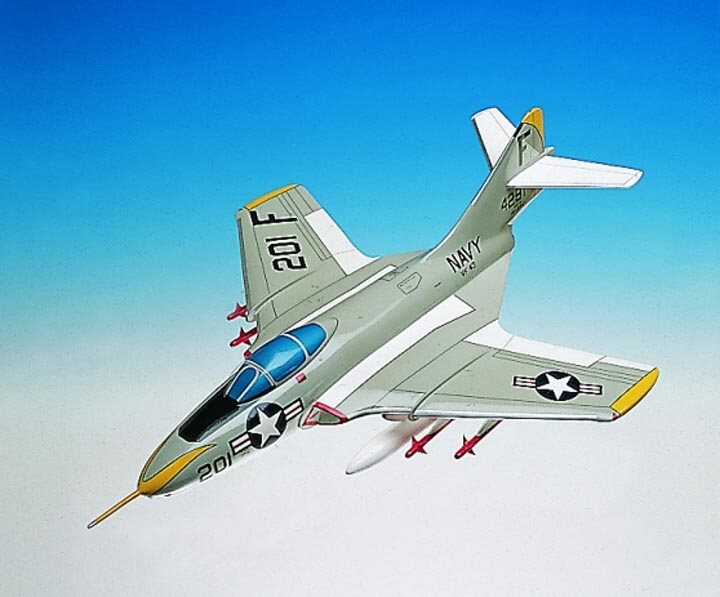
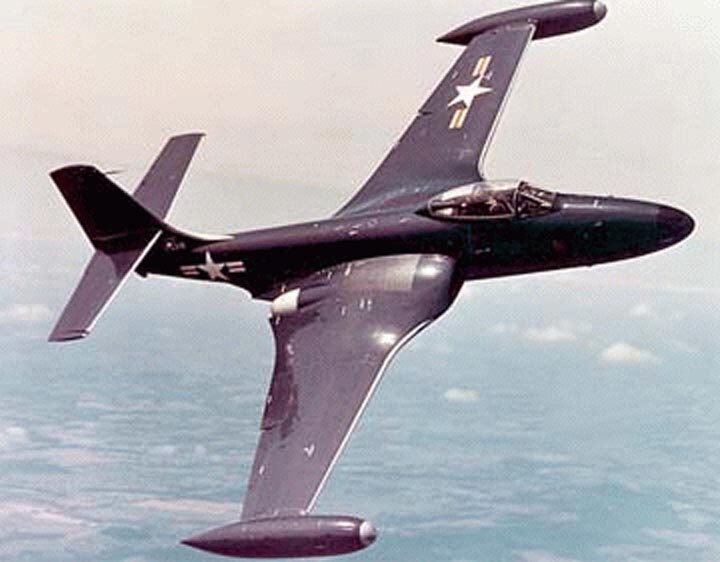
Then, while in Japan, we had an exchange pilot from the U S Navy whose name was Lt Richard (Dick) Yeatman. A nice guy, you could never find or locate one better. He asked the Wing Commander if he thought that maybe, just maybe, a couple of his jocks might just want to observe the Navy operation aboard an Aircraft Carrier. We all lucked out when our Wing Commander, Col Dave Schilling, agreed and told the Lt to get the ball rolling to coordinate the entire affair. Dick Yeatman went to work and got it approved that 3 pilots could be brought aboard the USS Yorktown for 15 days to observe all facets of their operation. The next step, was to select the 3 pilots that would go. Col Schilling decided that names would be placed in a hat and the 3 names would be drawn from it in that all of our young pilots wanted to go, but he felt that this was the way not to show any particular favoritism. Well, I lucked out in that my name along with 2 others was drawn. The three were, 1st Lt Franklin (Bud) Hasty, 1st Lt Ronald (Ron) Krejci and 2nd Lt Richard (Dick) Roussell. When totally approved and coordinated, we were told to pack our bags, grab the courier for Tachikawa AB to the South and then we would be taken to Yokuska Naval Port just South of Tokyo.
We did not know what mode of transportation that would take us to Yokuska, but when we arrived at Tachy, we were sached over to the Motor Pool, assigned a Jap driver and off we went in the middle of the night in this little Japanese pickup all cramped together in the cab. Strange that the Steering Column of the vehicle was on the right side and this driver knew nothing other than the horn and the accelerator. Two wheel bicycles were everywhere and we managed not to collide with anyone the entire trip to Yokuska.
 |
 |
 |
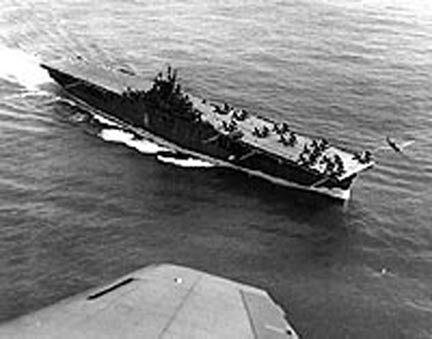 |
How these ships could travel like they were doing without colliding with each other reminded me of our flying formation in a flight of 4 or more. When an announcement would come across the speakers (RECOVER AIRCRAFT), we would run up to Vulture's Roost to watch. Daytime operation was not too bad although bad things would occasionally happen like the tailhook would bounce between the cables and the airplane would continue right on knocking off planes that were on the far end of the deck and his going over also. The ANGEL, recovery helicopter, was always airborne at the stern of the ship during take offs and landings. I watched one recovery where the pilot did not even get his feet wet that he was aboard the chopper. Unbelievable fast action by guys that knew what they were all to do. We were briefed on "MAN OVERBOARD", but it did not happen while we were on board. The Navy had TBM (Torpedo Bombers) aircraft that they were using out of Atsugi NAS like couriers to ferry personnel, deliver and pick up daily mail and when it came time for us to disembark, a request was sent out for an airplane to come aboard to pick us up. We were all watching when our plane came in and the pilot hooked his tail-hook on the approach edge of the flight deck and naturally, it stayed right there, but the plane continued on and the pilot lost control and it plowed into the conning tower. Needless to say, that was the end of that one and it had to go below to the hanger deck for repair. Another TBM was sent as a replacement and all was fine this time. From Atsugi NAS, we were placed on the Courier for Misawa and that ended our Observation Mission. Then, Dick Yeatman, wanted to debrief us and afterward we had to brief every pilot in both squadrons as to what we were able to observe.....as we were briefing our pilots, you could hear a lot of ooooooooooohhhhhhhhhhhhh and aaaaaaaaaaaahhhhhhhhhhh's. We all got the opinion that we had made a better choice of serving in the Air Force versus the Navy.
I attended the Squadron Officer's School at Maxwell AFB, Alabama in the fall of 1955 (class 56-a) and was asked to play in the school dance band. We played for dances at the club, played on local Montgomery, Alabama radio and television stations and got great notoriety from doing so--lots of fun!
 |
 |
 |
 |
 |
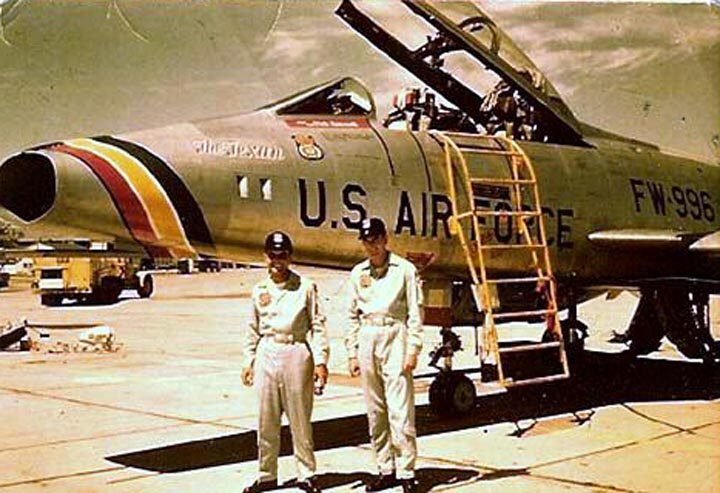
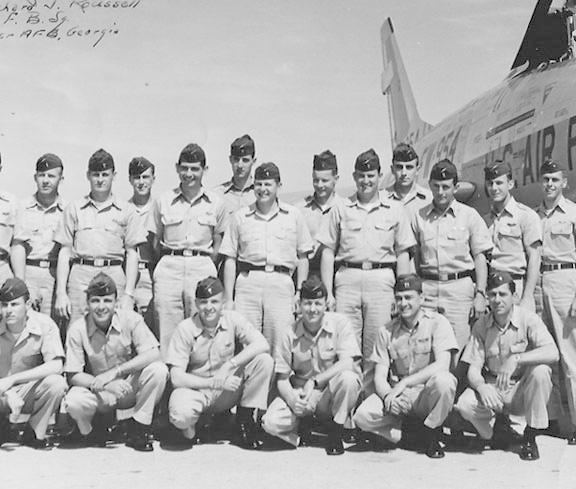
In 1956, we had a change of pace--Dot was pregnant with our first child, Debbie, and our entire wing was being transferred from the Strategic Air Command to the Tactical Air Command. The change from SAC to TAC called for a change in the type of aircraft that we would be equipped with. We were given brand new F-100's. Both the D model and each squadron ended with 2 F-models with controls in both the front and back. The pilot in the back seat could do everything that the pilot in the front seat could do except stopcock the engine. Only the front throttle quadrant would allow the throttle to be pushed outboard aft and back inboard (we called it around the horn).
 |
 |
 |
 |
 |
 |
 |
 |
 |
 |
 |
 |
 |
 |
 |
 |
 |
 |
 |
 |
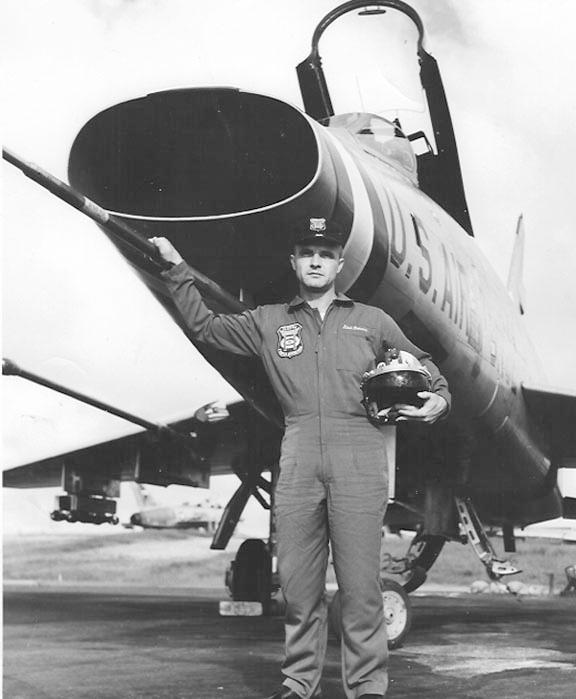
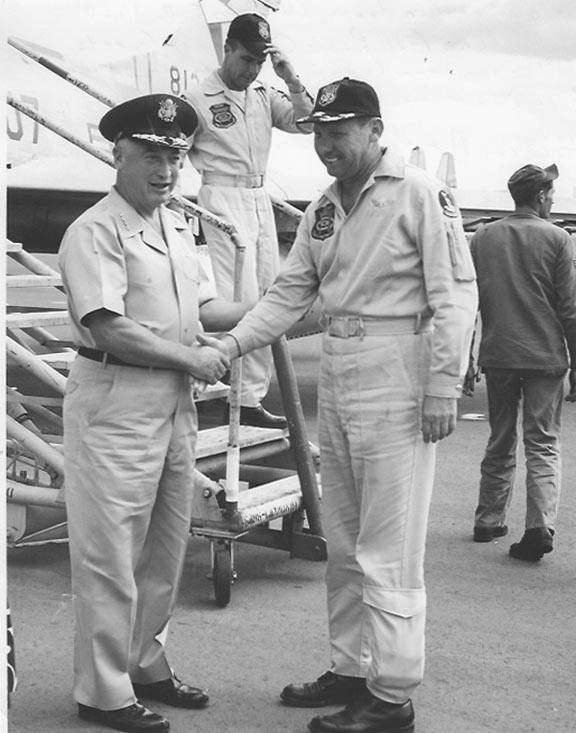
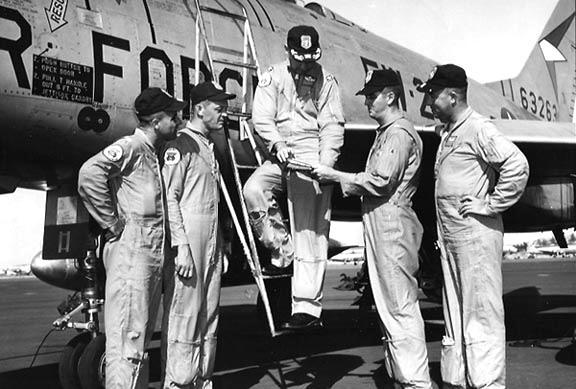
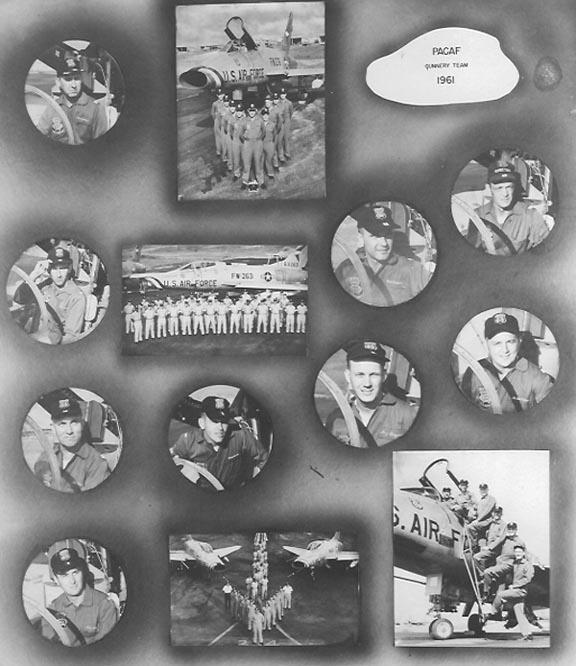
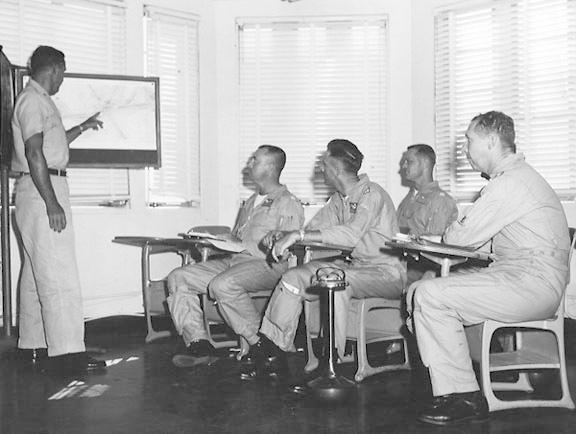
In late 1959, we had a weapon delivery competition between the forces from 5th Air Force and 13th Air Force. The weapons team formed from the 18th wing won the competition and was selected to represent PACAF (Pacific Air Forces) in the 1960 William Tell fighter weapons meet at Nellis AFB, Nevada. I was part of the team and we flew our own airplanes back to the states with our first stop at Williams AFB, Arizona for gunnery practice at the Luke AFB ranges. We spent one entire month there and were then off to Nellis for the actual competition.
 |
 |
 |
 |
 |
 |
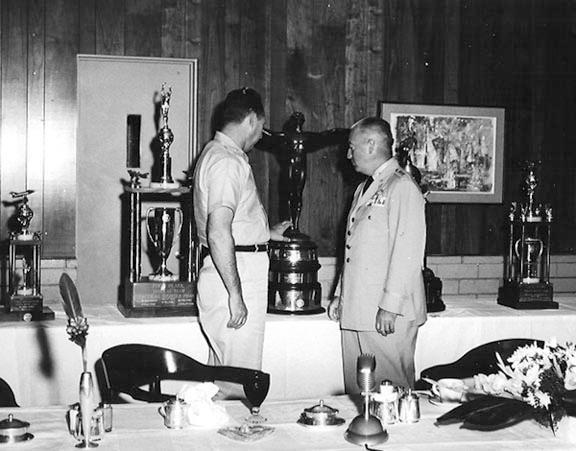
The PACAF commander had sent $1,500.00 to the team for us to go to downtown Koza, Okinawa and find a clothes tailor willing to help design flight suits that would shine over the USAF Thunderbirds stationed at Nellis. We did our very best and looked great with what we had to work with. As for the competition, we took home a bunch of trophies and won the overall trophy which was the heavy. We returned those back to General Rosie O'Donnell and a big banquet was held in our honor in the Hickham AB officer's club that same evening--then, on back to Kadena.
 |
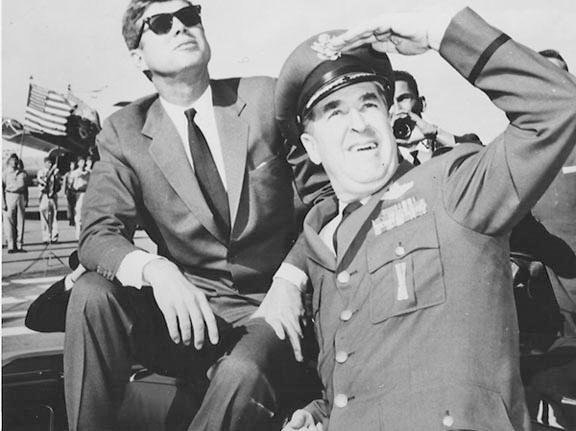
In 1961, I was transferred to England AFB, Louisiana again in the F-100 aircraft. I guess it was time for a desk job with nominal flying so-- I was made chief of the command post of the 401st Fighter Wing. At Homestead AFB, Florida I took part in the 1962 Cuban crisis that ended successfully without firing a shot or dropping a bomb or napalm.
 |
 |
 |
 |
 |
In early 1963, I was summoned to Washington DC to be interviewed for another assignment--thus, our move from Alexandria, Louisiana to hot/dry Las Vegas, Nevada and the detachment 1, 1129th Special Activities Squadron, Nellis AFB, Nevada.
 |
 |
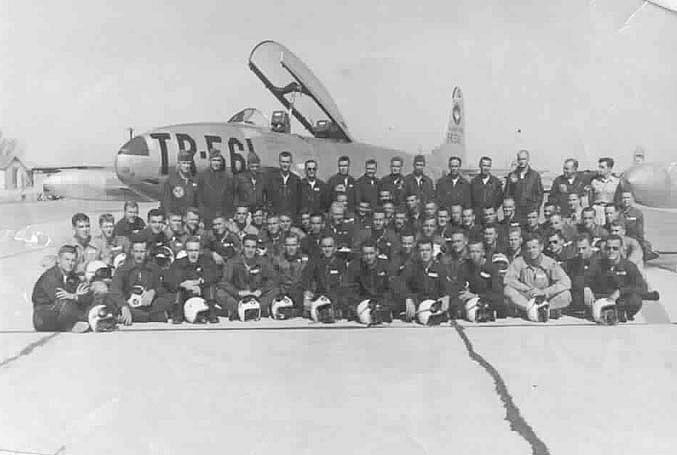 |
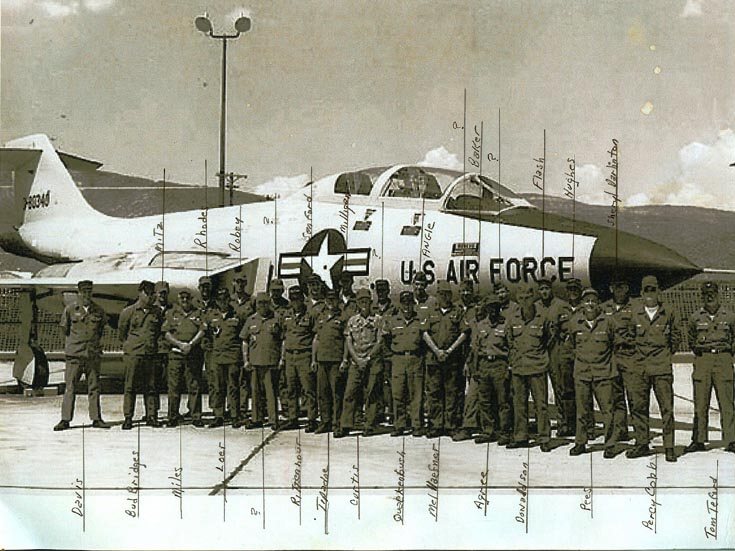
It seems we had a high and slow airplane for reconnaissance. but the powers in Washington including the white house wanted one that would go high and fast. We had lost Francis Gary Powers over Russia and one of my classmates in Pilot Class 53A, Maj. Rudolph Anderson, while flying his U-2 over Cuba in 1962. My family and I arrived in Las Vegas in August of 1963. I was taken to Area 51 (Groom Lake) of the Nevada Test Site to see a real sight--the big black Kelly Johnson-designed A-12--wow what a sight it was! We could tell not even our wives where we were going and what we'd be doing, but only that we were involved in something necessary to support our end of the "cold war". I was not one of the pilots selected to fly the airplane, but there was need for experienced fighter qualified pilots to act in the capacity of chase pilot, mobile control officer, weather recce pilot and other support missions. We had one A-12 trainer, nicknamed the Titanium Goose of which I was allowed to the fly in the back seat either three or four times.
![[titanium goose (trainer)]](articles/rr3.jpg) |
 |
![[click to enlarge image]](articles/trainer_f104.jpg) |
![[click to enlarge image]](articles/titaniumgoose.jpg) |
![[click to enlarge image]](articles/rr12.jpg) |
 |
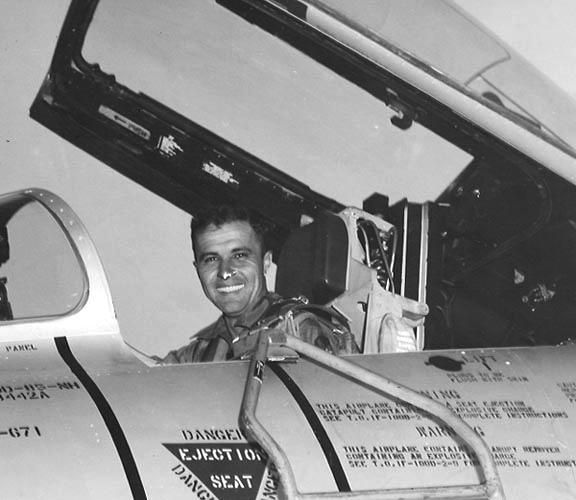
The chase planes were F-101 (Voodoos) and I was sent back to Shaw AFB, South Carolina to learn the ground school and check out in the airplane. On my return, I was then qualified to do the assigned chases, etc. Lockheed test pilots, CIA civilian pilots, and a couple of Air Force pilots flew the A-12.
 |
In 1967, I was re-assigned to Nellis AFB, attended the fighter weapons school, and became chief of the Operational Test and Evaluation Division of the 57th Fighter Weapons Wing with over 200 projects in progress.
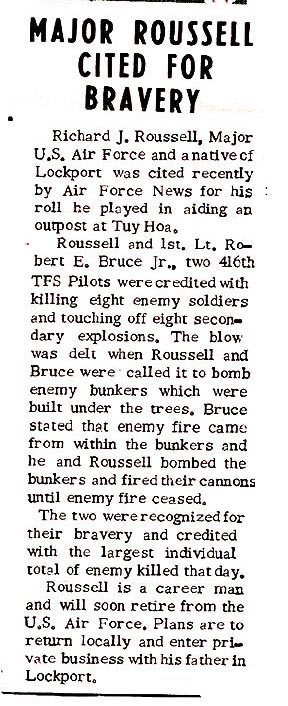
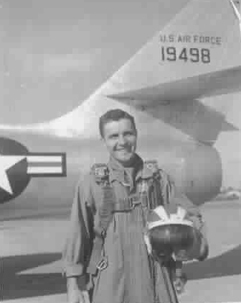
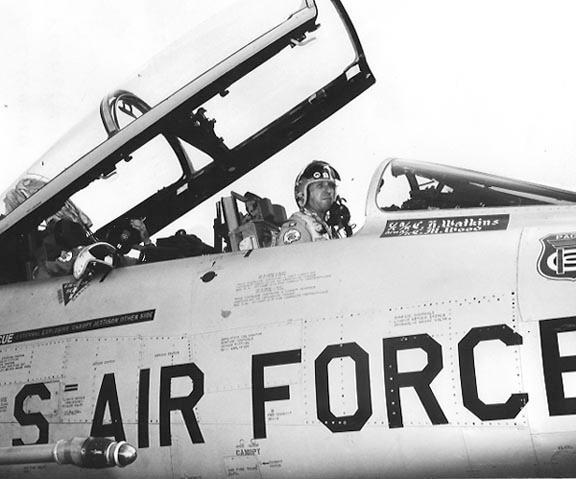
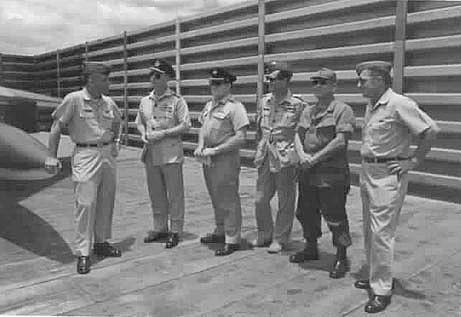
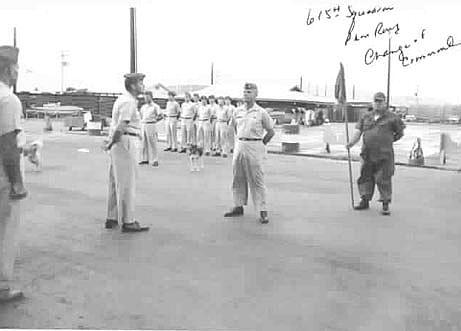
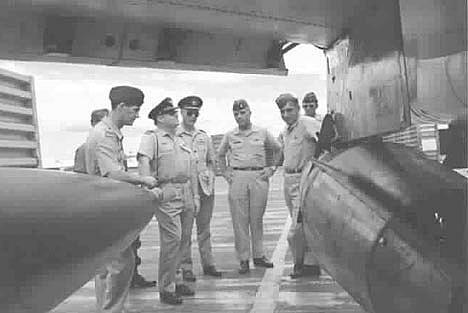
In 1968, I was sent to Elgin AFB, Florida as Tactical Air Command manager of laser projects with smart bombs, which proved to be very accurate when aimed at a desired target. After completion of the tests, I returned to my old job at Nellis. From there, I was transferred to Tuy Hoa, Vietnam as operations officer of the 416th fighter squadron (F-100). When the base was turned over to the Vietnam Air Force, I was moved to Phan Rang to complete my tour. Shortly afterward, the squadron commander was transferred back to the states and I was assigned as commander of the 615th squadron. Before the tour ended, the president decided that we would cut back forces in Vietnam, and I was transferred to K-55 (Osan AB, Korea) to become commander Det 1 of the 347th Wing. I was responsible for the alert pad with pilots and airplanes coming from Okinawa and Japan since special weapons were not allowed in Japan and the assigned targets were closer to South Korea than Okinawa.
 |
 |
 |
 |
 |
 |
 |
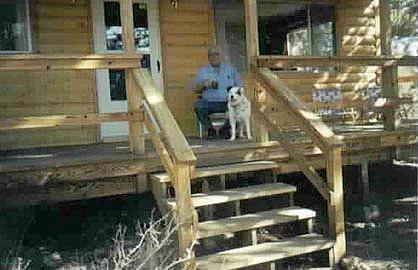
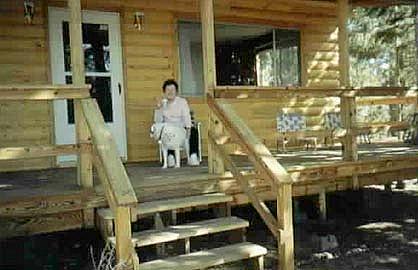
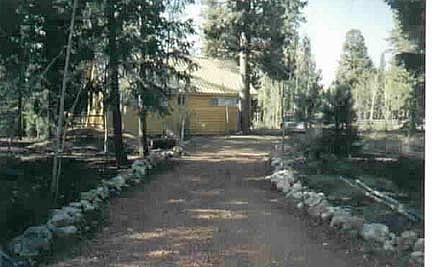
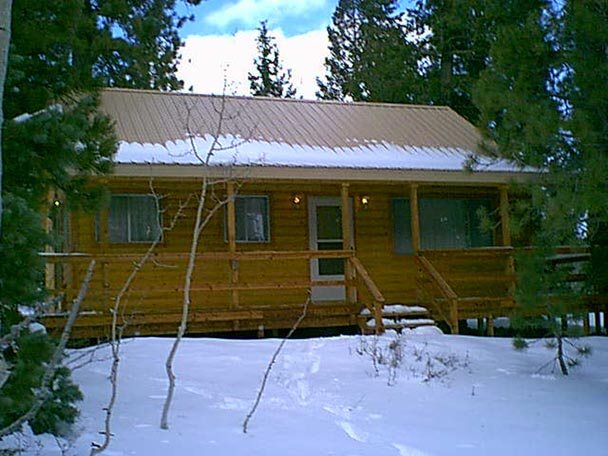
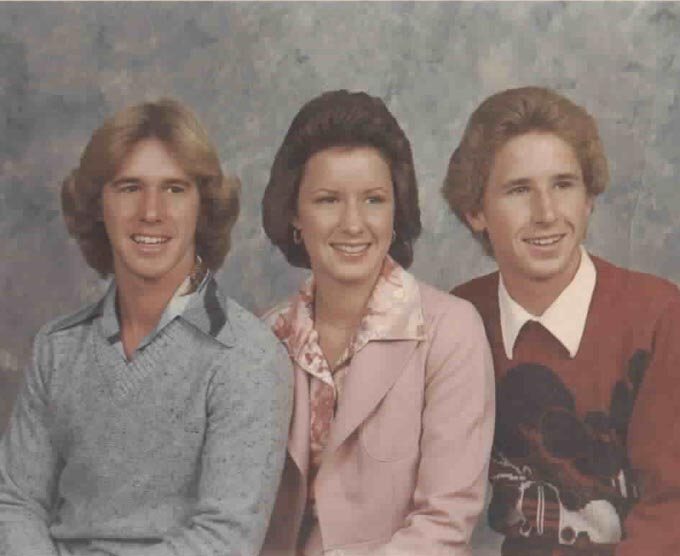
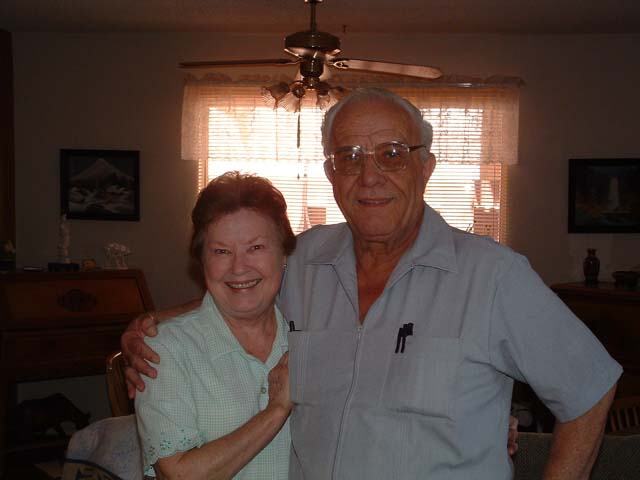
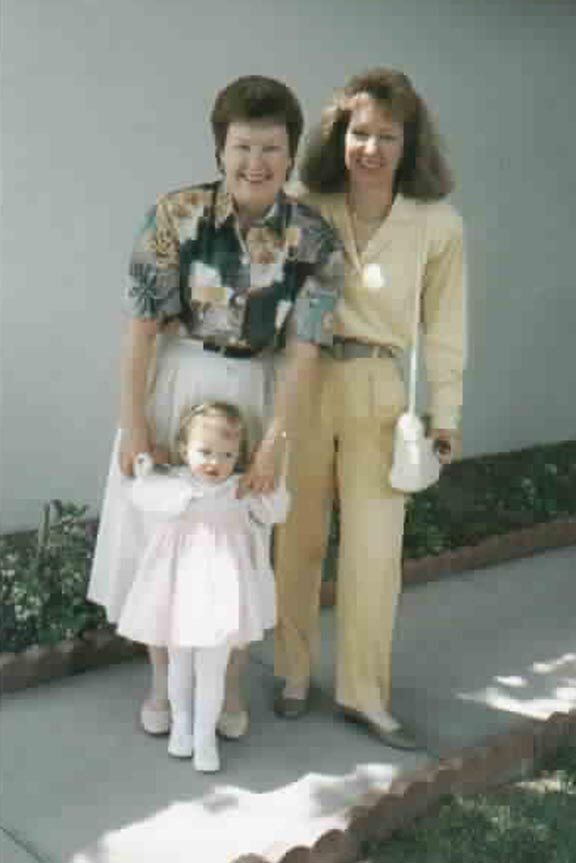
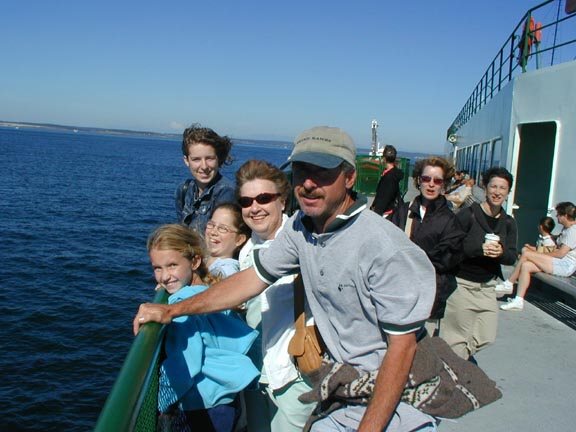
Having earned the rating of Command Pilot with over 4,000 hours of logged flying time, I decided to retire after this tour. My retirement occurred at Mc Chord AFB, Washington on 1 June 1971. Since my retirement from the military, my wife and I have been in business in Las Vegas, Nevada. Even in retirement, we chose to remain close to the career we loved, building our home near Nellis AFB where we can continue to enjoy the sounds and sights of today's Air Force as it carries on without us. Fulfilling our retirement dream, in 1967 we also purchased vacation property on a mountain in southern Utah where we built a beautiful 4-bedroom vacation home where we spend as much time as we can enjoying the most beautiful surroundings of the place named "color country". My wife and I have been very lucky to have had all three of our children reside here in Las Vegas at one time or another. We have four grandchildren (all girls) and really enjoy their company. Our youngest son relocated a few years ago to Washington State along with his wife and two daughters. Both my wife and I are cancer survivors. We have both been treated by great doctors and are now doing fine. I hope that this reading has not been too boring to you.
Dick Roussell
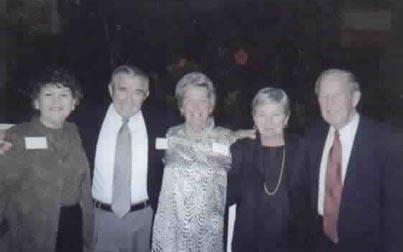
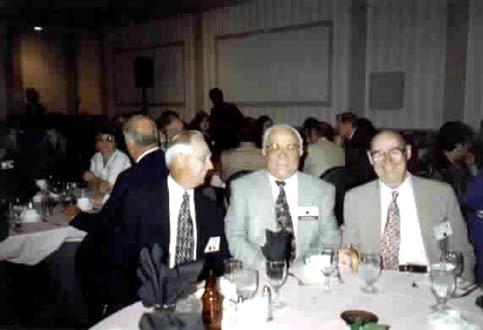
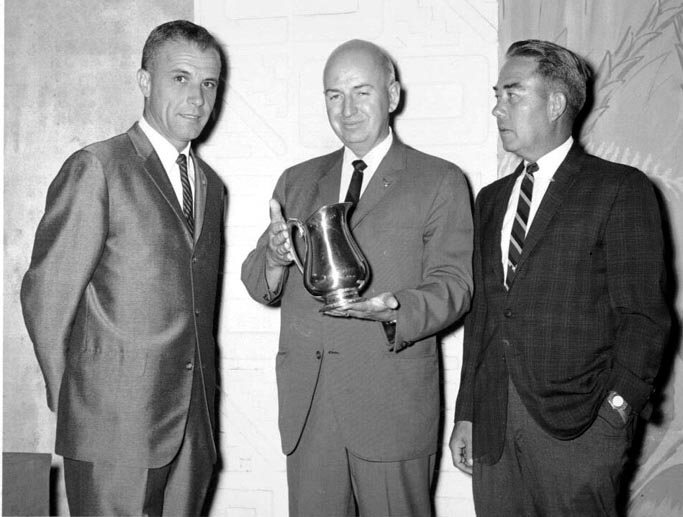 Dick Roussell, David Thompson, Charlie Otterbourg My first civilian job after retirement from USAF in 1971. Photo taken at Stardust Hotel and Casino. Otterbourg and I, both assistant general managers of Hamilton Management Corporation, being awarded by Hamilton general manager Thompson for most mutual funds and insurance sales. |
 |
 |
 |
 |
 |
 |
 |
 |
 |
 |
 |
 |
 |
 |
 |
 |
 |
 |
 |
 |
 |
 |
 |
 |
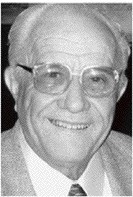
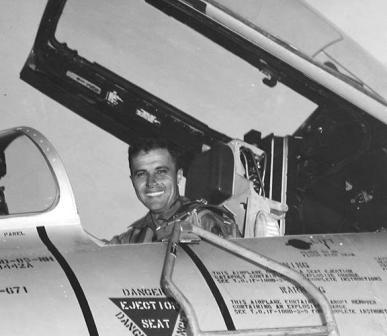 Major Richard Roussell U.S. Air Force, Retired Major Richard "Dick" Joseph Roussell, age 77, a 45-year resident of Las Vegas, passed away May 3, 2008. Dick was always proud of his Lockport, La., heritage, where he was born July 23, 1930, to Sidney Jr. and Anita Roussell. He married Dorothy Faircloth in 1953, in Albany, Ga. His alma mater was LSU, where he attended U.S. Army ROTC for the first two years and U.S. Air Force ROTC for his junior and senior years. As a commissioned officer in the U.S. Air Force, Dick flew 309 F-100 combat missions in Vietnam for which he was awarded the Distinguished Flying Cross and the Air Medal with 10 Oak Leaf Clusters. Dick was one of the elite selected by the Air Force to participate in the CIA A-12 Project OXCART at Area 51, where Dick flew the F-101 Voodoo to provide chase for the Mach 3+ A-12. After his tour of duty at Area 51, Dick was chief of the Operational Test and Evaluation Division of the 57th Fighter Weapons Wing at Nellis AFB where he was instrumental in the development of laser-guided weapons. Dick held the rating of Command Pilot with over 4,000 hours of logged flying time. He was also one of the original founders of Roadrunners Internationale and was an invaluable asset to the association as it developed. He remained a businessman in Las Vegas throughout his life after retiring from the Air Force. Dick is survived by his wife, Dorothy of Las Vegas; his children, Debra and husband, Daniel, and Donald, both of Las Vegas, and David and his wife, Melissa, of Coupeville, Wash.; his grandchildren, Brittany, Erin, Sara and Porsche; and one great-grandson, Colin. The immediate family gathered privately to celebrate the life and memory of their beloved husband and father. Memorial services will be scheduled at a later date.
 |
 |
 |